October 22, 2009
Results for Sale 2191, 
PHOTOGRAPHS & PHOTOGRAPHIC LITERATURE.
Swannn Auction Galleries

192 WEEGEE (1899-1968) Out of this World. 2,400 Sold
193 WEEGEE (1899-1968) Life Class. 1,080 Sold
194 WEEGEE (1899-1968) Celebrant. 2,160 Sold
195 WEEGEE (1899-1968) Dancers. 2,400 Sold

Sale 2191 Lot 192
WEEGEE (1899-1968)
“Out of this World.” Ferrotyped silver print, 6 1/2×8 1/2 inches (16.5×21.6 cm.), with the Acme Photo hand stamp and a mimeographed caption label on verso. 1946
Estimate $1,500-2,500

Sold for $2,400
(Weegee’s People, unpaginated.)


WEEGEE (1899-1968)
“Life Class.” Ferrotyped silver print, 6 3/4×8 1/4 inches (17.1×21 cm.), with the Acme Photo hand stamp and a mimeographed caption label on verso. 1946
Estimate $1,500-2,500

Sold for $1,080
(Weegee’s People, unpaginated.)


Sale 2191 Lot 194
WEEGEE (1899-1968)
“Celebrant.” Ferrotyped silver print, 8 1/4×5 3/4 inches (21×14.6 cm.), with the Acme Photo hand stamp and a mimeographed caption label on verso. 1946
Estimate $1,500-2,500
Sold for $2,160
(Weegee’s People, unpaginated.)


Sale 2191 Lot 195
WEEGEE (1899-1968)
Dancers.” Ferrotyped silver print, 8 1/4×6 3/4 inches (21×17.1 cm.), with the Acme Photo hand stamp and a mimeographed caption label on verso. 1946
Estimate $1,500-2,500
Sold for $2,140
(Weegee’s People, unpaginated.
Weegee’s New York, 279 (variant).)

336 WEEGEE (1899-1968) Untitled (fans and cop). 0 Unsold
337 WEEGEE (1899-1968) Self-portrait (distortion with cameras, crown and scepter). 0 Unsold
338 WEEGEE (1899-1968) Hedda Hopper (distortion). 0 Unsold

December 8, 2009
Results for Sale 2199, 
PHOTOGRAPHIC LITERATURE & FINE PHOTOGRAPHS 
Swannn Auction Galleries…

Sale 2199 Lot 336
WEEGEE (1899-1968)
Untitled (fans and cop). Ferrotyped silver print, 11×10 1/2 inches (27.9×26.7 cm.), with the “Weegee The Famous” and Arthur Fellig hand stamps on verso. Circa 1940
Estimate $2,000-3,000
Unsold
From the Marcuse Pfeifer Gallery, New York; to the present owner in 1976.


Sale 2199 Lot 337
WEEGEE (1899-1968)
Self-portrait (distortion with cameras, crown and scepter). Ferrotyped silver print, 9×7 1/2 inches (22.9×19.1 cm), with the “Credit Photo by Weegee” and “Photo Representatives” hand stamps on verso. Circa 1950
Estimate $1,500-2,500

Unsold

Sale 2199 Lot 338
WEEGEE (1899-1968)
Hedda Hopper (distortion). Ferrotyped silver print, 9 1/4×7 1/2 inches (23.5×19.0 cm.), with a “Photo-Representatives” hand stamp and notations, in pencil, on verso. Circa 1951
Estimate $1,500-2,500

Unsold

At the Michael Hopppen Gallery, “Weegee – It’s a crime to take photographs this good…”

From the gallery’s website: http://www.michaelhoppengallery.com
(A text indebted to the introduction of Weegee’s World.)
“It’s a crime to take photographs this good…’

Always in the right place at the right time, Weegee’s lense was perpetually aimed the visceral and sometimes violent city of New York. In 1993, Wilma Fellig, Weegee’s widow, bequeathed his entire archive of original prints to the ICP in New York, and we are delighted to offer selected pieces of this unique photographers work which includes many images never previously seen in the UK.
Weegee photographed New York in the 1930s and 1940s… Weegee’s voyeuristic eye sought out the harsh realities of the urban experience, but also the joie de vivre and carefree attitude which typified the years between the wars.
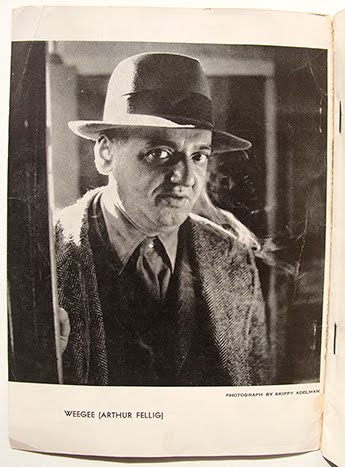
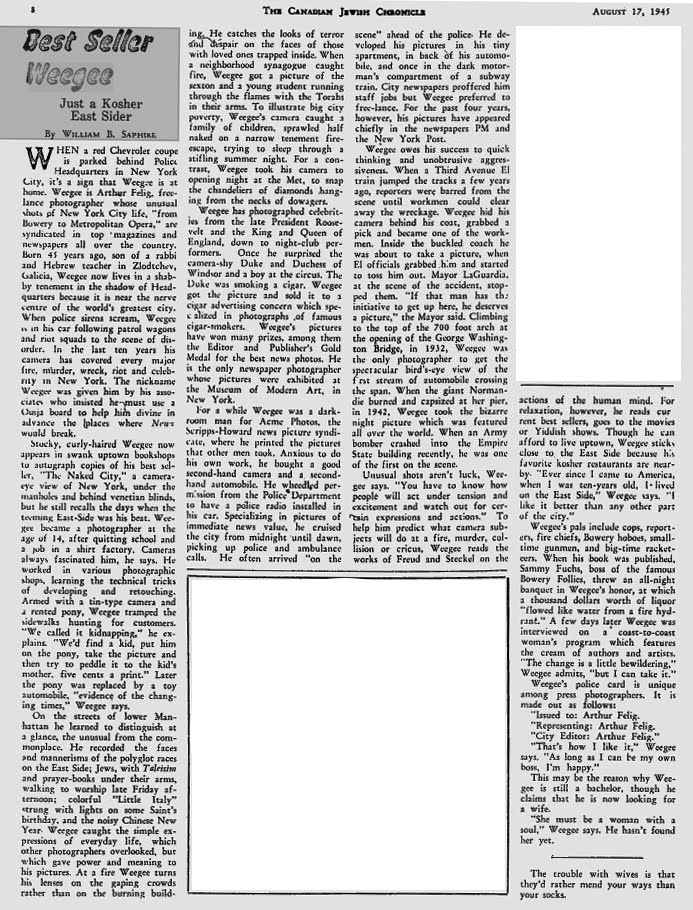
Born in 1899 in the Austrian province of Galicia, which is today part of Ukraine, Weegee (real name Usher, then Arthur Fellig) was the second of seven children from Jewish parents. Weegee’s family left Europe in 1910 for the Lower East Side ofManhattan, where Weegee grew up. He left home at 15 and in 1917 got a job in a photo studio and became assistant to a cameraman. In 1921, he got a part-time position at the New York Times and its legendary agency Wide World Photos, soon afterwards switching to Acme News pictures. Eventually, frustrated with the lack of recognition for his work, and not having his name on photographs, he became a freelance news photographer by late 1935.


Weegee’s images bridge the gap between art, evidence and photojournalism. His nickname was a phonetic rendering of ouija,as in ouija board, due to his sixth sense of being able to arrive at a scene minutes after the occurrence of a crime. In 1938, Fellig was the only New York newspaper reporter with a permit to have a portable police-band short wave radio. The trunk of his car was a carefully maintained darkroom, to enable himto deliver his freelance images tothe newspapers as speedily as possible. He worked predominantly at night listening closely to radio broadcasts, often beating the NYPD to the scene. It also meant he was on hand to document the raucous night life in the Bowery, Harlem and The Village, and he went on to document the society events and functions of the era.
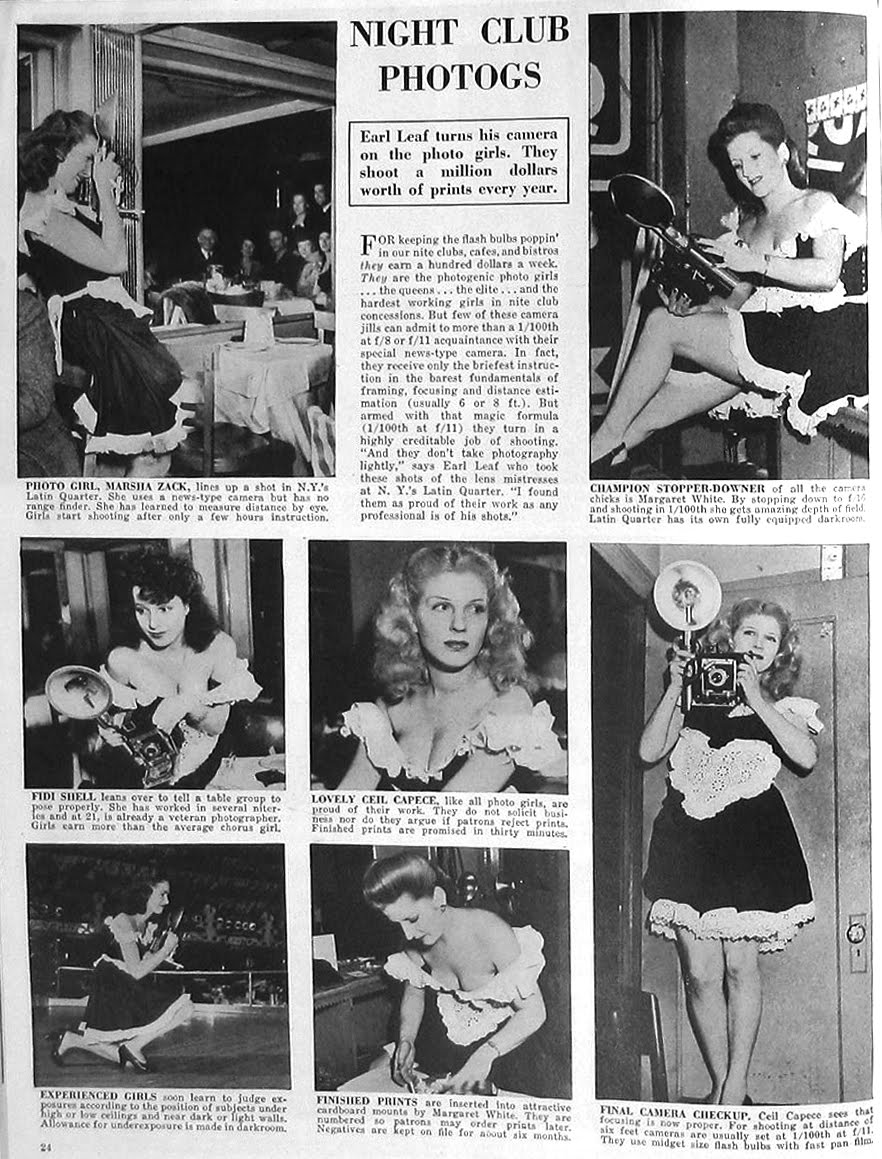
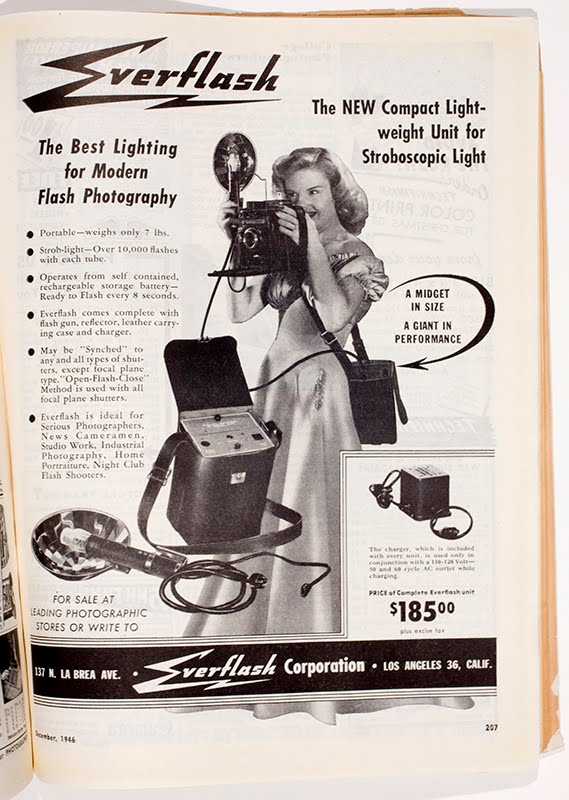
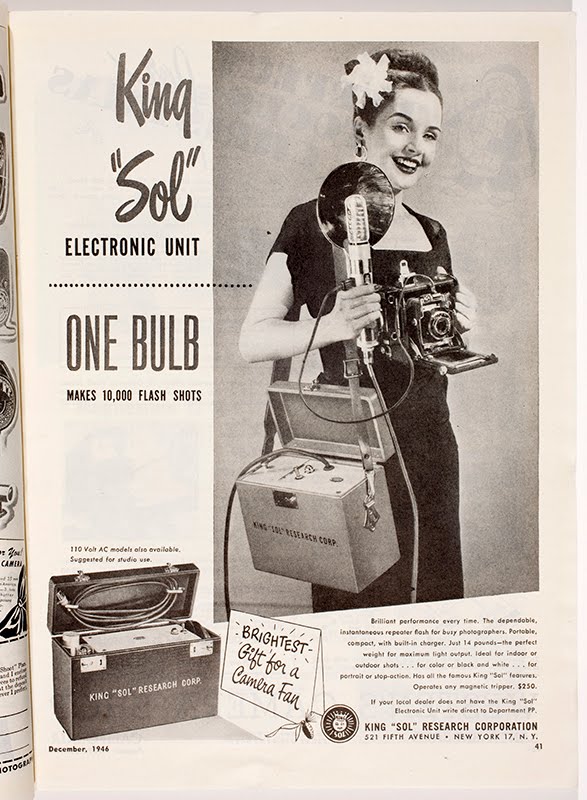
His photographs were taken with the very basic press photographer equipment, a [Speed Graphic] Graflek [sic] and flashbulbs which gave his work such graphic qualities. He had no formal photographic training being entirely self taught, and was a relentless self-promoter.”


Michael Hopppen Gallery
3 Jubilee Place,
London SW3 3TD

Tel: +44 (0)20 7352 3649
Fax: +44 (0)20 7352 3669

www.michaelhoppengallery.com

The great WNYC radio news blog posted an audio recording of a fascinating panel discussion, The 1950 WNYC American Art Festival, broadcast October 30, 1950. It was moderated by Edward Steichen. The photographers who were present (Margaret Bourke-White, Waker Evans, Gjon Mili, Lisette Model (too frightened to read her own words, so they were read by Steichen), Wright Morris, Homer Page, Irving Penn, Ben Shahn, Charles Sheeler, and Aaron Siskind) spoke in alphabetical order for about five minutes. Steichen talked about or quoted several photographers who were not present (Harry Callahan, Louis Faurer, Frederick Sommer, Weegee, Edward Weston). It’s unfortunate that Weegee wasn’t there. Nevertheless Steichen speaks of him fondly and Weegee’s more-or-less at the same table with the rest of the art photography gang…

It can be heard here:

At 30:20 minutes into the panel discussion, after (the deadly serious) Siskind and before (the deathly ill) Weston, Capt. Steichen speaks about then reads some of Weegee’s words… (here they are transcribed)

“…Our remaining guests are among those not present. I can’t resist bringing in the fabulous Weegee.
Who is the first press photographer to move from the field of spot news reporting and become a photographic commentator. Where his original and major claims to fame were police and fire pictures their stands recorded in Weegee’s two books, Naked City and Weegee’s People a fantastic procession of human foibles and emotion. If photography did not have Weegee in the United States of America we would surely have to invent him. I’ve picked out some quotes from some of Weegee’s sayings:

‘To me a photograph is a page from life, and that being the case, it must be real.’
‘Don’t forget about anything and everything else to be human, think, feel. When you find yourself beginning to feel a bond between yourself and the people you photograph, when you laugh and cry with their laughter and tears, you will know you’re on the right track.’
‘One doesn’t just go up to strange men, women, children, elephants or giraffes and say look this way please, laugh, cry, show some emotion or go to sleep underneath a funeral canopy’, they would have called me crazy and called the cops who would have called the wagon with the guys in white and I would have wound up in the psychopathic ward in Bellevue Hospital in a straight jacket.’
‘[My or Press?] Pictures are different. The photographer must be on the scene at the split second of occurrence. Here’s my formula: Dealing as I do with human beings and I find them wonderful. I leave them alone, I let them be themselves, holding hands with the love light in their eyes, sleeping, or merely walking down the street. The trick is to be where people are. All one needs to do is to be on the spot, alert, and human. I think the secret is knowing what you want. I worked for years then there were no more gangsters, no really good murders, so I got a job with Vogue doing fashion photography. (laughter). They always send a girl along to make sure I didn’t steal the silverware. (laughter) So i got tired of fashion and so I went to Hollywood. I’ve appeared in five pictures as a street photographer. The greatest bit of casting since Lassie.” (much, much laughter and applause)…


Lassie, Unidentified Photographer…

One wonders which Weegee photos the Wells Fargo Advisors have in their collection… Nevertheless, there is at least one from the iconic and infamous Fellig..

From the Krasl Art Center website:


SEPTEMBER 11-NOVEMBER 1
Paperwork, A Corporation’s Collection: Prints and Photography from the Corporate Collection of Wells Fargo Advisors, LLC
Exhibition underwritten by Wells Fargo Advisors, LLC, Member SIPC, Hollywood Road Office, St. Joseph
Location: Dar Davis Gallery and Gallery II 
Reception: Friday, September 11, 5:30–7:30 pm
Enjoy a sampling of images culled from a major corporate art collection. Photographs and works on paper by iconic artists from the 19th, 20th, and 21st centuries will be on view. Artworks by George Catlin, Bernice Abbott, Helen Frankenthaler, Andy Warhol and the infamous crime photographer Weegee are but a few of the highlights in this excellent exhibition. 
The Krasl Art Center
707 Lake Boulevard
Saint Joseph, MI 49085
http://www.krasl.org/exhibit_schedule.aspx