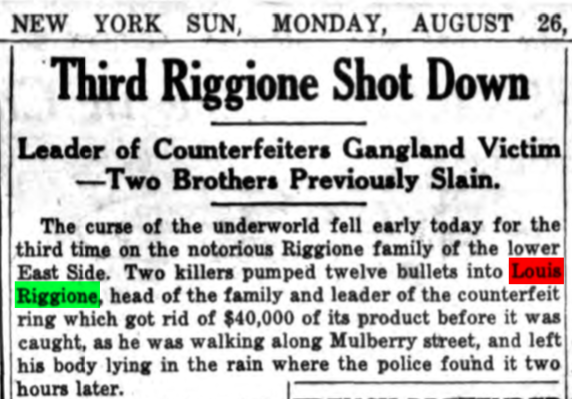
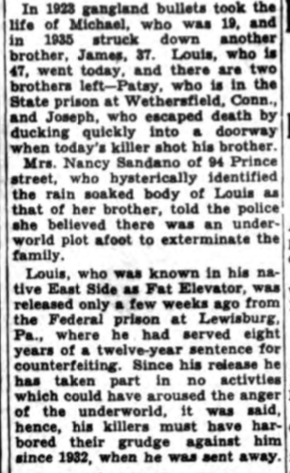
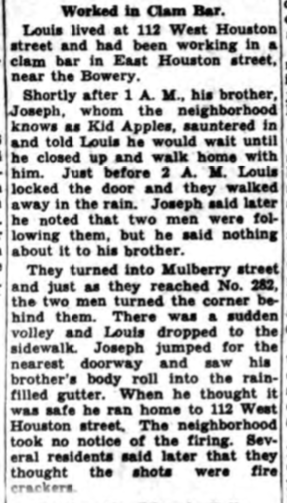
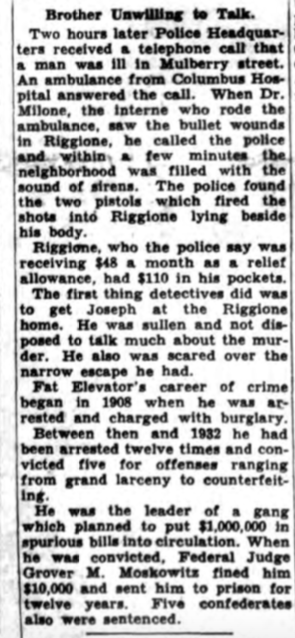
New York Sun, August 26, 1940, p.21

New York Sun, August 26, 1940, p.21
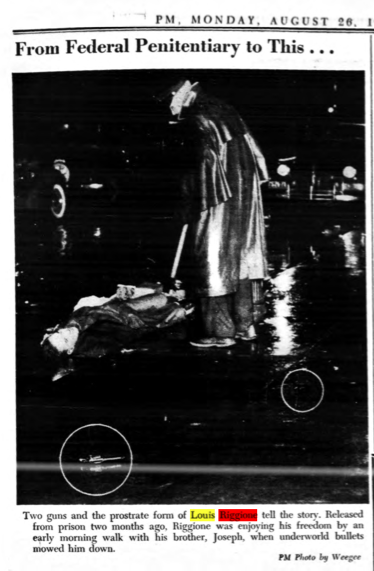
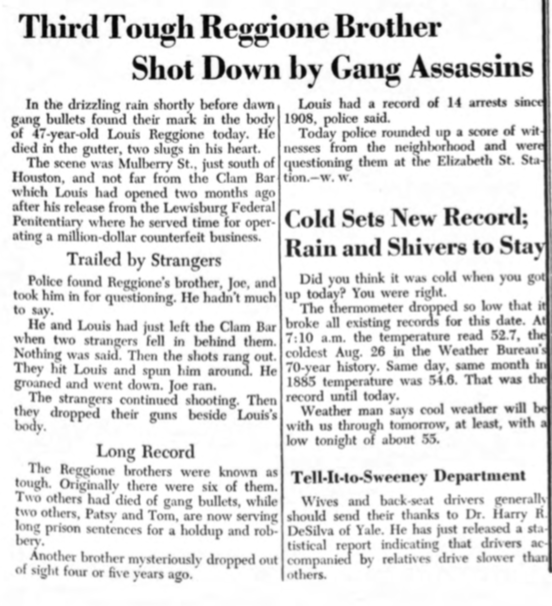
PM, August 26, 1940, p.9
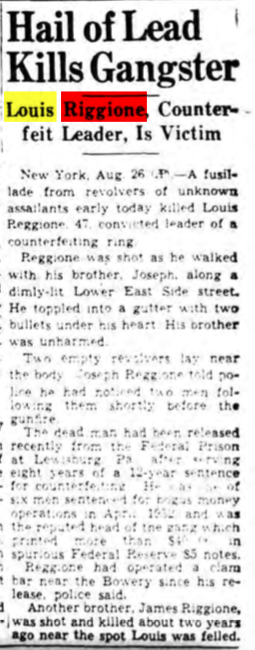
Syracuse Herald Journal, 1940, p.15
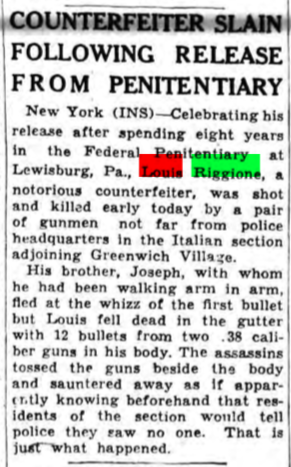
Times Record, August 26, 1940, p.20
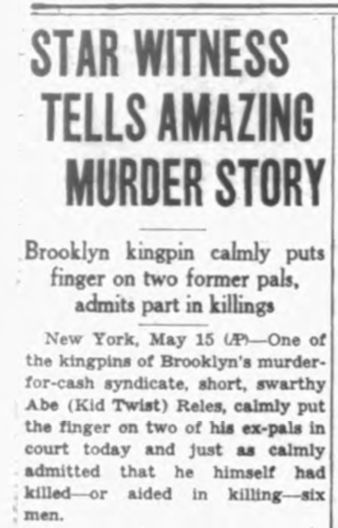
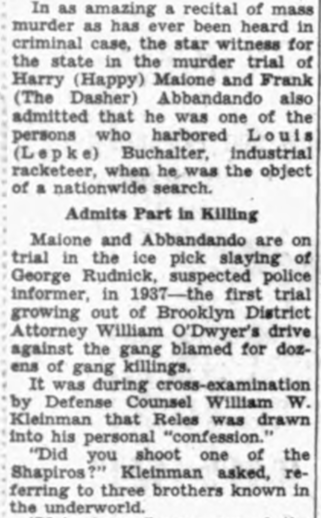
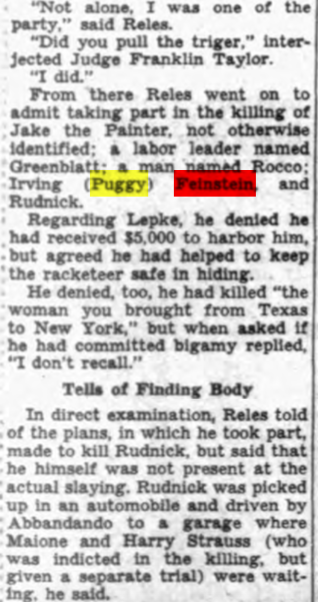
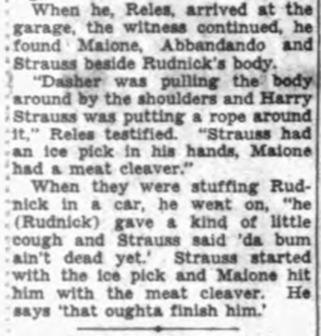
Buffalo Courier-Express, May 16, 1940, p.4
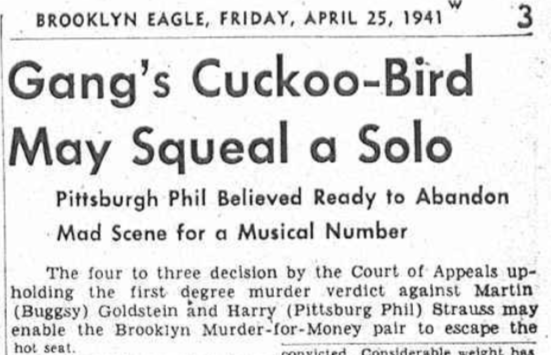
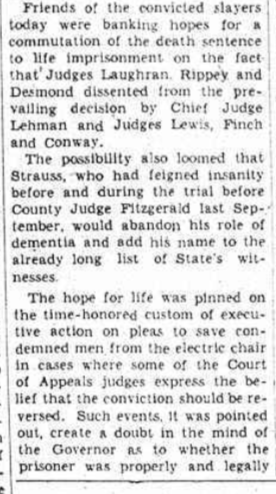
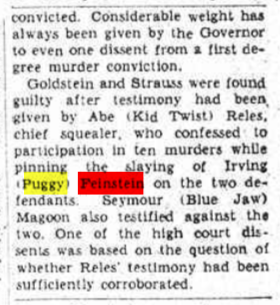
Brooklyn Eagle, April 25, 1940, p.3
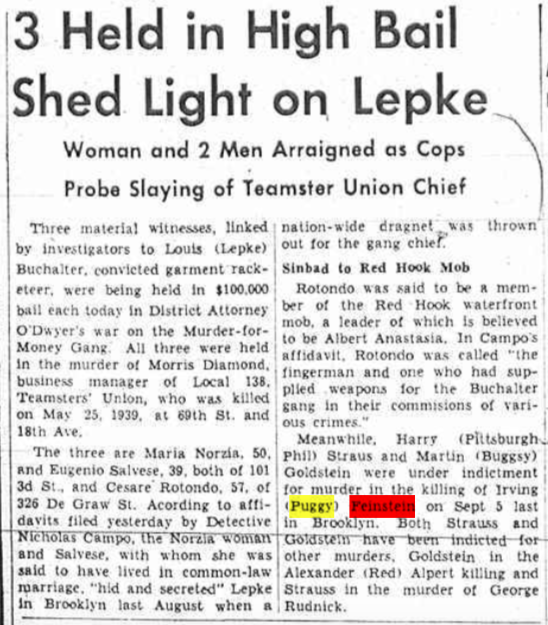
Brooklyn Eagle, April 13, 1940, p.3
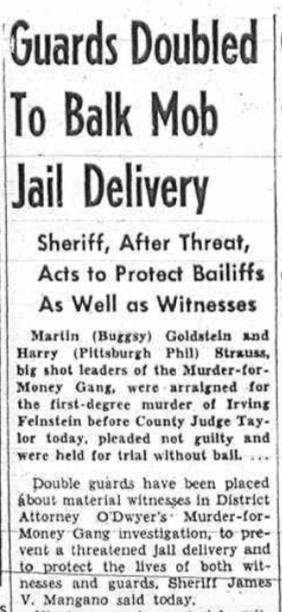
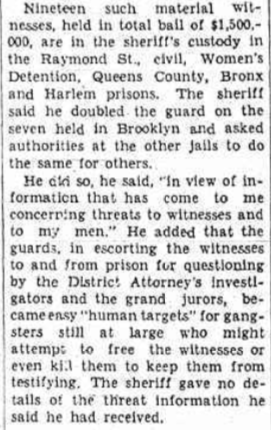
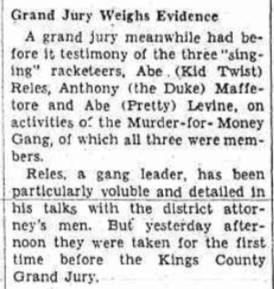
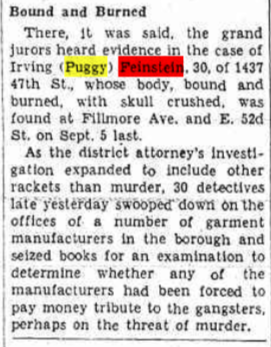
Brooklyn Eagle, April 12, 1940, p.3
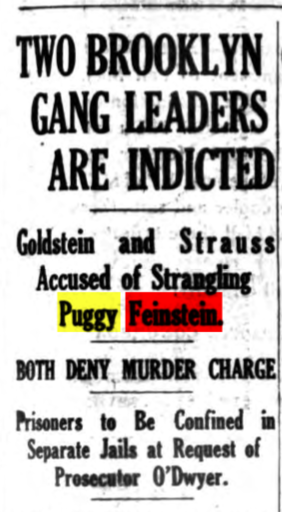
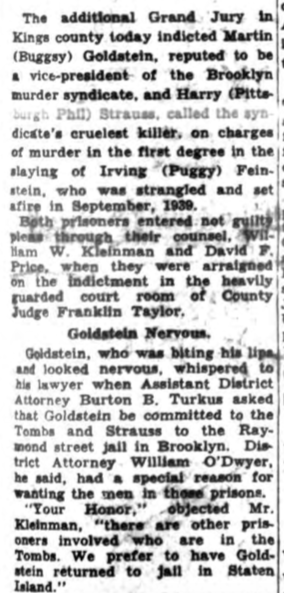
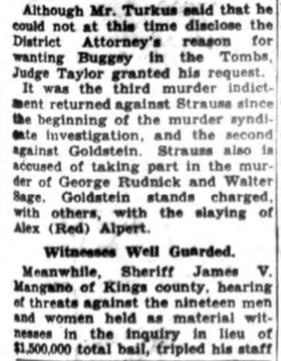
New York Sun, April 12, 1940, p.1
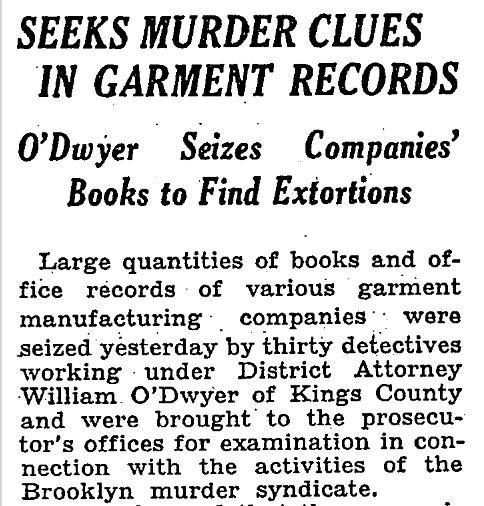
New York Times, April 12, 1940, p.20
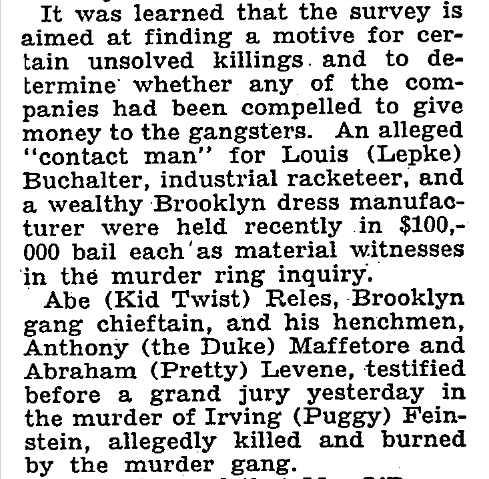
Large quantities of books and office records of various garment manufacturing companies were seized yesterday by thirty detectives working under District Attorney William O’Dwyer of Kings County and were brought to the prosecutor’s offices for examination in connection with the activities of the Brooklyn murder syndicate. It was learned that the survey is aimed at finding a motive for certain unsolved killings and to determine whether any of the companies had been compelled to give money to the gangsters. An alleged “contact man” for Louis (Lepke) Buchalter, industrial racketeer, and a wealthy Brooklyn dress manufacturer were held recently in $100,000 bail each as material witnesses in the murder ring inquiry.
Abe (Kid Twist) Reles, Brooklyn gang chieftain, and his henchmen, Anthony (the Duke) Maffetore and Abraham (Pretty) Levene, testified before a grand jury yesterday in the murder of Irving (Puggy) Feinstein, allegedly killed and burned by the murder gang.
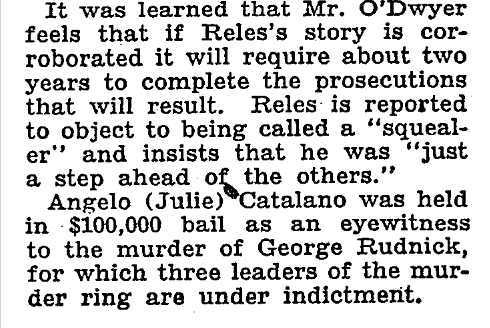
It was learned that Mr. O’Dwyer feels that if Reles’s story is corroborated it will require about two years to complete the prosecutions that will result. Reles is reported to object to being called a “squealer” and insists that he was “just a step ahead of the others.”
Angelo (Julie) Catalano was held in $100,000 bail as an eyewitness to the murder of George Rudnick, for which three leaders of the murder ring are under indictment. New York Times, April 12, 1940, p.20

Weegee, Herald Tribune, August 4, 1940
Heat-Wave Nocturne in Downtown New York
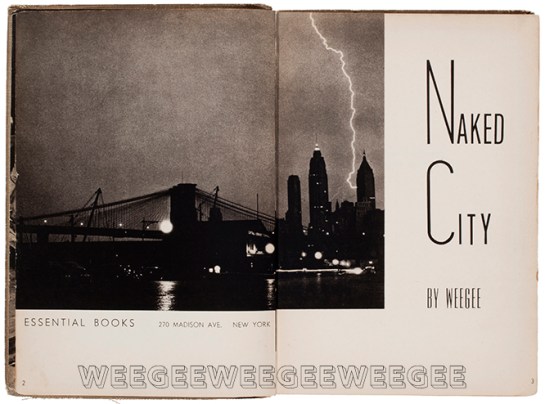
Weegee, “Naked City,” 1945
PM, July 22, 1940, pp.16-17
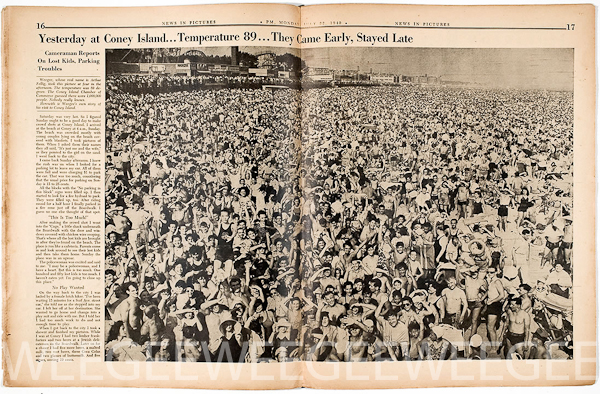
Yesterday at Coney Island… Temperature 89… They Came Early, Stayed Late
Cameraman Reports on Lost Kids, Parking Troubles
Weegee, whose real name is Arthur Fellig, took this picture at four in the afternoon. The temperature was 89 degree. The Coney Island Chamber of Commerce guessed there were 1,000,000 people. Nobody really knows.
Herewith is Weegee’s own story of his visit to Coney Island.
Saturday was very hot. So I figured Sunday ought to be a good day to make crowd shots at Coney Island. I arrived at the beach at Coney at 4 a.m., Sunday. The beach was crowded mostly with young couples lying on the beach covered with blankets. I took pictures of them. When I asked them their names they all said, “It’s just me and the wife,” as they pointed to the girl on the sand. I went back to the City.
I came back Sunday afternoon. I knew the rush was on when I looked for a parking lot to leave my car. All of them were full and were charging $1 to park the car. That was too much, considering that the usual price for parking on Sunday is 15 to 25 cents.
All the blocks with the “No parking in this block” signs were filled up. I then started to look for a fire hydrant to park. They were filled up, too. After riding round for a half hour I finally parked in a fire zone just off the Boardwalk. I guess no one else thought of that spot.
“This Is Too Much!”
After making the crowd shot I went into the “Cage,” a little shack underneath the Boardwalk with the door and windows covered with chicken wire cooping. That’s where all the lost kids are brought in after they’re found on the beach. The place is run like a cafeteria. Parents come in and look around to see their lost kids and then take them home. Sunday the place was in an uproar.
The policewoman was excited and said to me: “I may be a policewoman, and I have a heart. But this is too much. One hundred and fifty lost kids is too much. I haven’t eaten yet. I’m going to close up this place.”
No Play Wanted
On the way back to the city I was hailed by a female hitch hiker. “I’ve been waiting 15 minutes for a Surf Ave. street car,” she told me as she stepped into my car. I left her off at her destination. She wanted to go home and change into a play suit and ride with me. But I told her I had too much work to do and not enough time to play.
When I got back to the city I took a shower and finished my pictures. While I was at Coney I had two kosher frankfurters and two beers at a Jewish delicatessen on the Boardwalk. Later on for a chaser I had five more beers, a malted milk, two root beers, three Coca Colas and two glasses of buttermilk. And five cigars, costing 19 cents.
PM, July 22, 1940

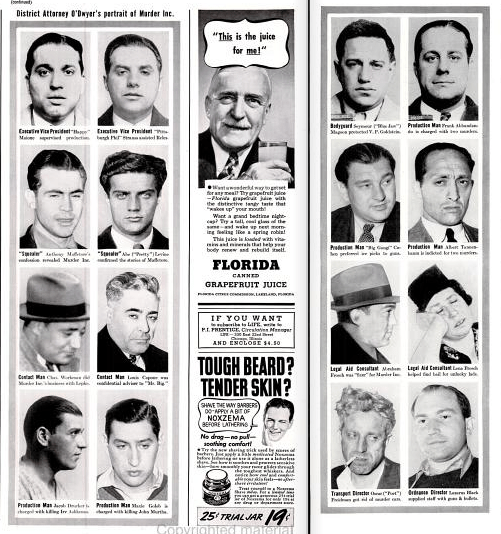
Life, April 15, 1940, pp.96-99
The Strange Case of MURDER INC.
Huge ring dealing in depth for profit is cracked by new Brooklyn prosecutor.
In Brooklyn last week there unfolded a horror tale, bigger and more odious than any ever imagined by any detective dreamer or amateur of crime…
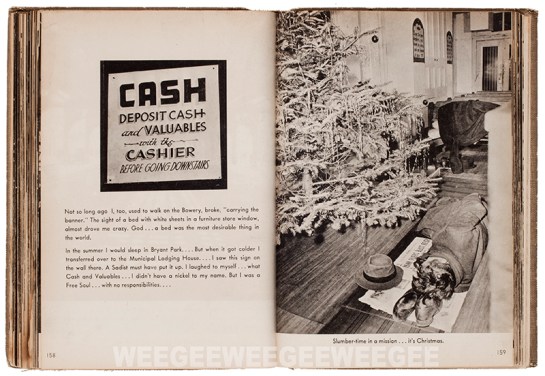
Weegee, Naked City, 1945, pp.158-159
Not so long ago I, too, used to walk on the Bowery, broke, “carrying the banner.” The sight of a bed with white sheets in a furniture store window, almost drove me crazy. God… a bed was the most desirable thing in the world.
In the summer I would sleep in Bryant Park… But when it got colder I transferred to the Municipal Lodging House… I saw this sign on the wall there. A Sadist must have put it up. I laughed to myself… what Cash and Valuables… I didn’t have a nickel to my name, but I was a Free Soul… with no responsibilities…
Slumber-time in a mission… it’s Christmas.

Weegee, Naked City, 1945, p. 159
 WEEGEEWEEGEEWEEGEE