


“Crime Stories: Photography and Foul Play” at the Metropolitan Museum, 03/07–07/31/2016,
03/13/2016

Filed under Exhibitions in our electronic filing cabinet:
Raunchy, Raucous Coney Island
By J. Hoberman…Its subject is the mental construct “Coney Island”—an illusion filtered through such earthy sensibilities as the tabloid photographer Weegee, the American scene painter Reginald Marsh, or the anonymous artisans who created the banners and signage for Coney’s attractions.
Coney Island peaked as a people’s playground during World War II and began its slow decline when the largest of the amusement areas, Luna Park, burned to the ground in the summer of 1944. Although Weegee’s stunning news photo of the ruins, showing two forlorn painted hearts above a lone fireman in a sea of wreckage, gets smaller play than it might, the image of absolute devastation haunts the exhibition’s final section…
Weegee and Morris Engel, his sometime colleague at the leftwing tabloid PM, are the show’s best-represented photographers…
… and the photos Weegee took of the World War II–era Coney Island crowd from a vantage point on the Steeplechase Pier…


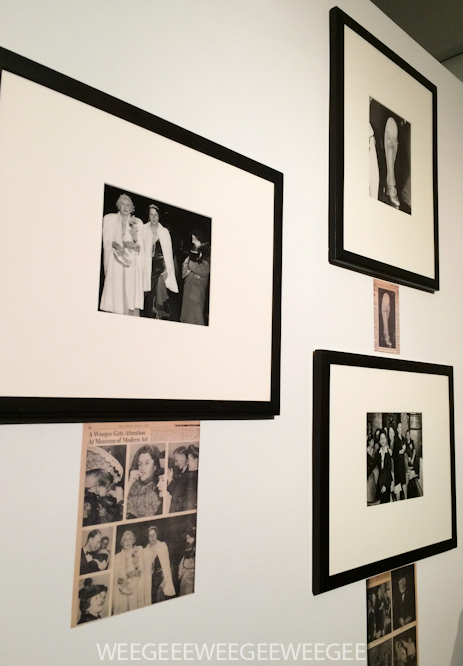

A PM gets attention in Chelsea… (January 14, 2016)
“PM New York Daily: 1940 – 48” – Steven Kasher Gallery (January 14 – February 20, 2016)
Great exhibition… (Our rating: 4 and a half speed graphics:-) Everything is for sale…
A Tabloid’s Photographs
That Don’t Tell
the Whole Story
By John Leland Jan. 15, 2016The images here look trustworthy, don’t they? After all, what captures the world more objectively, with less bias and distortion, than a photograph? Ralph Steiner, the great photographer and documentary filmmaker, warned anyone who looked at the images not to trust them.
“ ‘The camera cannot lie’ is true only in the sense that it is a little harder to tell a complete falsehood with a camera than with words,” Mr. Steiner wrote. “The thing to bear in mind in ‘reading’ photographs is that none of them can tell the full truth.”
A remarkable thing about these sentences is that Steiner wrote them in his capacity as a picture editor at PM, the groundbreaking, photo-rich New York tabloid that was published from 1940 to 1948, where these images first ran. Among the remarkable things about PM, aside from the talent showcased there — Dashiell Hammett, Lillian Hellman, Drs. Seuss and Spock, Weegee and Helen Levitt, for starters — was that it called upon readers to view photographs differently.
“The editors there recognized the photographer as an interpreter, which was very different for the time,” said Jason E. Hill, an assistant professor of art history at the University of Delaware and author of a forthcoming book about PM. “If you look at Life magazine, the photographs function as statements of fact. PM presented press photography as an interpretation. It cast doubts on photography’s claims as a truthful account of the world. That’s unique now, and certainly in the ’40s.”
The 1941 Weegee photograph “Their First Murder” (Slide 11) illustrated the PM method, Mr. Hill said. The image covered half a page, with just a little text and a much smaller image of a dead body. “Another paper would lead with the corpse,” Mr. Hill said. “But at PM, it was much more interesting to think about how people consume the sights around them.”
In eight years, the tabloid was gone. But more than 75 of its images can be seen at the Steven Kasher Gallery in Chelsea through Feb. 20.
“PM New York Daily: 1940 – 48” – Steven Kasher Gallery (January 14 – February 20, 2016)

NY Times Tweet (screenshot)
In our electronic filing cabinet, please file this under exhibitions…

In Toronto:
“Wednesday, December 9, 2015, 6 PM
Join Brian Wallis… on a tour of the exhibition.”
More info, and the above quote, here (ryerson.ca).

05/24/2015
Great print!
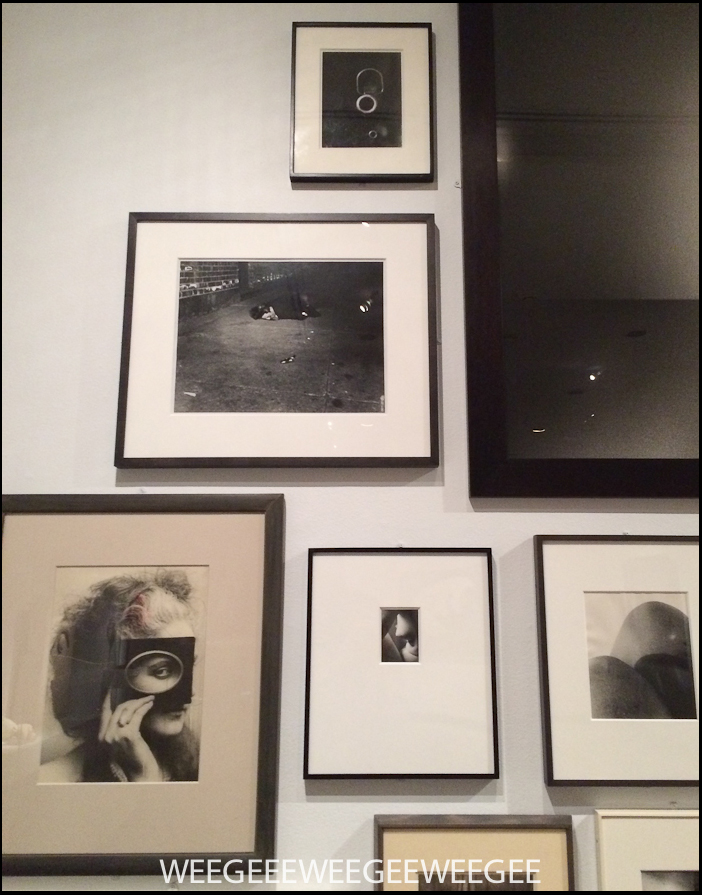
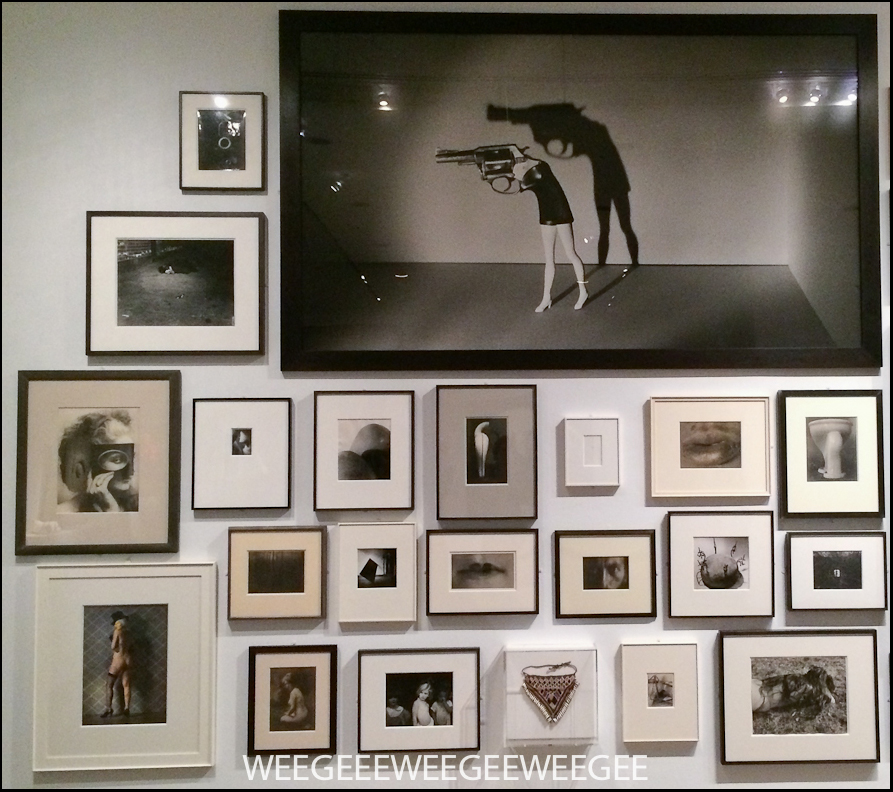
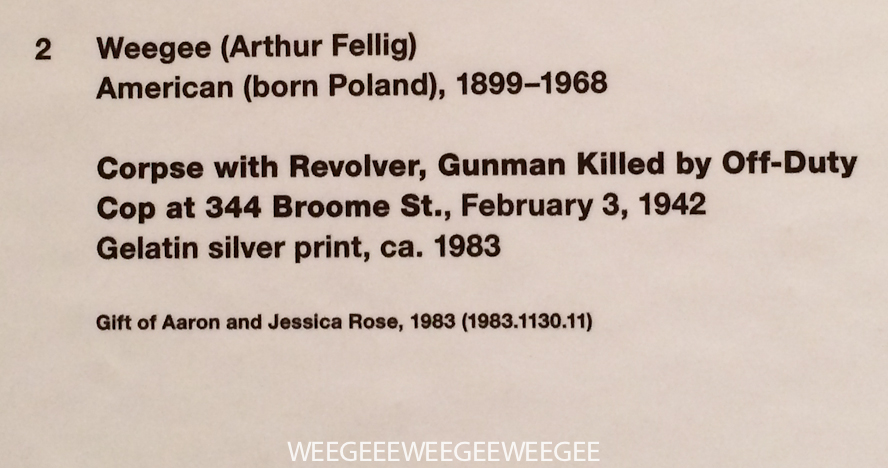
“Fatal Attraction: Piotr Uklański Selects from the Met Collection.” Metropolitan Museum, March 17–June 14, 2015.
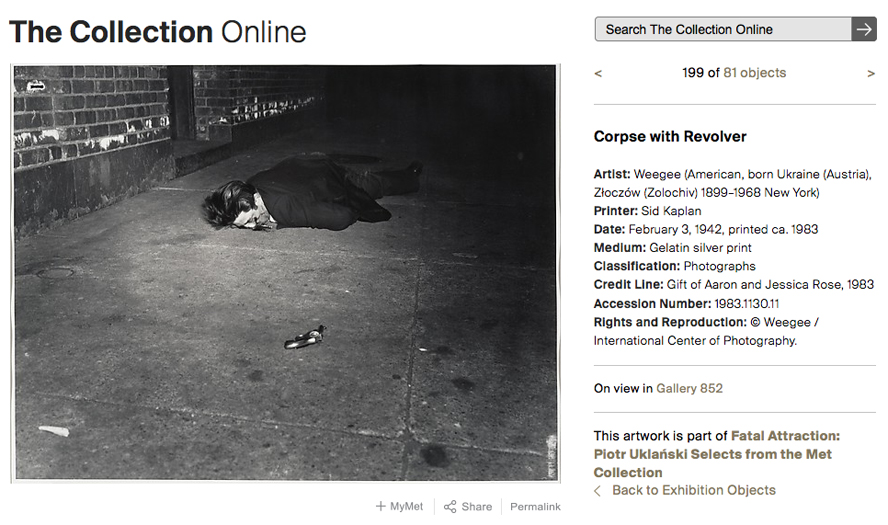
Screenshot from Met Museum online catalog… Poland or Ukraine?


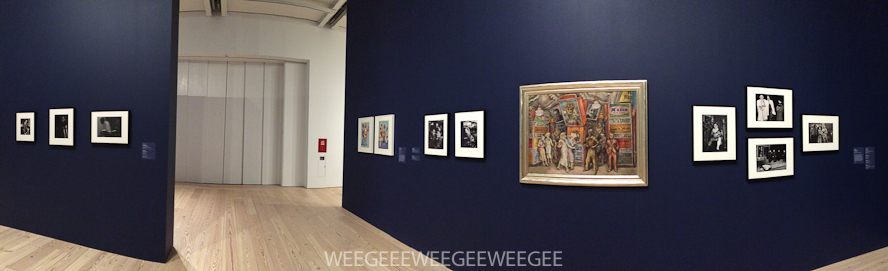
Whitney Museum, June 3, 2015
(The blues… I love that Weegee and John Coltrane, and Elvin Jones, photos by Roy DeCarava, are in the same room… Except for behind-the-scenes of this blog, like right now – Africa Brass, 1961 – John Coltrane and Elvin Jones and Weegee are not often in the same room…)
The Whitney’s online catalog presents 36 Weegee photos… (At this moment, in our opinion, the Whitney’s online catalog is the most annoying and the most useless… Great new building, but not-great online catalog…)
MoMA’s online catalog for Weegee has about 25 photos… (At this moment – second place.)
And the Metropolitan’s online catalog has 92 objects, and the best of the three…
(To be continued…)


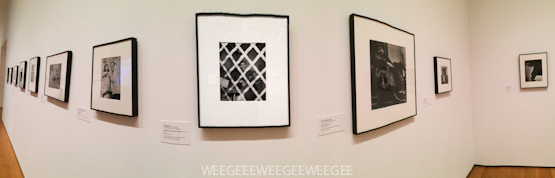
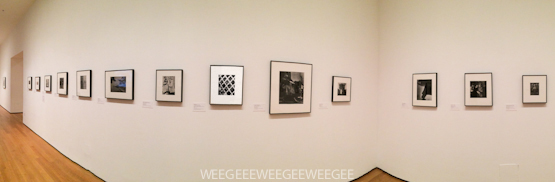
MoMA, 2015
Fellig the Zellig, in a Cartier-Bresson – Lisette Model sandwich, with a side order of (largely) European Modernism…
A Weegee photo in the exhibition of the Thomas Walther Collection of more than 300 photos: “one of the most important acquisitions [made in 2001] in the history of The Museum of Modern Art, a collection of rare photographs made between the two world wars…”
Great essay: “In the Police Wagon, in the Press, and in The Museum of Modern Art” – is here: pdf.
More info on the exhibition is here.
Cool Walther collection website is here.

Some of the cool conservation-related things on the object:photo website would be useful and helpful with explanation and interpretation, like the “paper material” page, and even the “surface” page is a little opaque for us amateurs…
(Although Weegee’s Frank Pape photo is obviously the highlight of the Thomas Walther collection, if not the entire MoMA photography collection, it doesn’t really fit in with the more self-consciously modernist and “experimental” photos…)

Screenshot from MoMA website.
It’s always nice to see the back of a photo on a museum website (or exhibition). Who’s handwriting is that? (It resembles a handwriting that is on the back of several other Weegee photos, and is always as inaccurate as this.) The Photo-Representatives stamp was probably used in the mid 1950s, and presumably not stamped by Weegee. (Perhaps just a copy negative was known in the 1980s.) What is the significance of the pink paper?

Naked City, pp. 166-167 (Pape and Gold)
At dawn on the Lower East Side, a few days before the Frank Pape photo was made, Weegee made three classic photos in the “Death Strikes a Truck Driver at Dawn… And the Living Suffer” story, published in PM on September 7, 1944. The Frank Pape photo was among the last “crime” photos (the precision of the composition reflects many, approximately 9, years of “practice”) that Weegee ever made in New York City (of course he made a few “crime” photos in L.A. a few years later and on the movie tour in 1950). The Frank Pape photo was one of the last “Weegee” photos that Weegee made… On November 22, 1944 a photo of Abraham Gold (charged with murdering his wife) was published in PM; on January 31, 1945 a photo of two alleged basketball bribers was published in PM. And that’s all folks… The rest of his photos (about 25) in PM were made mostly at the Metropolitan Opera, Times Square, and Sammy’s. They were about the opera, Frank Sinatra, elections, orphans, a storm, and the war… (and Weegee himself). The end… or a beginning…
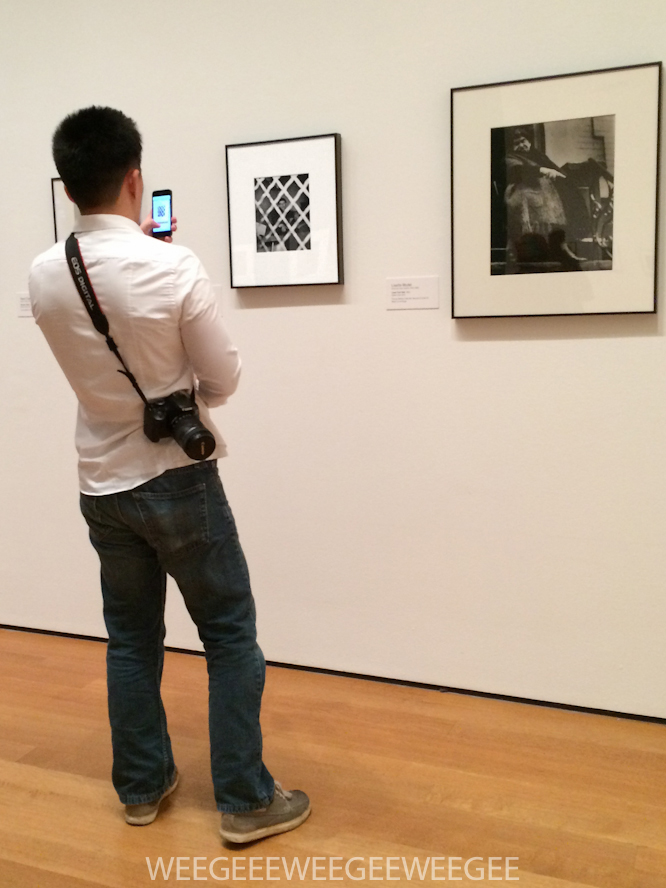
One of many photographers photographing the photograph…
MoMA, 2015
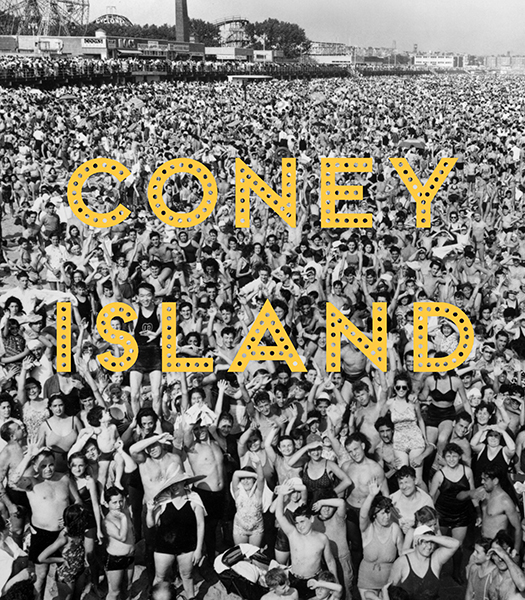
Coney Island, Visions of an American Dreamland, 1861–2008, “Edited by Robin Jaffee Frank; With contributions by Charles Denson, Josh Glick, John F. Kasson, and Charles Musser,” 2015
Image and quotes from the Yale U. Press website.
“This dazzling catalogue highlights more than 200 images from Coney Island’s history, including paintings, drawings, photographs, prints, posters, film stills, architectural artifacts, and carousel animals. An extraordinary array of artists is represented…” including Weegee and Weegee and Weegee.
We haven’t gotten our greasy, hypo-stained paws on this book yet, but if you judge a book by its cover, this book is a good one…

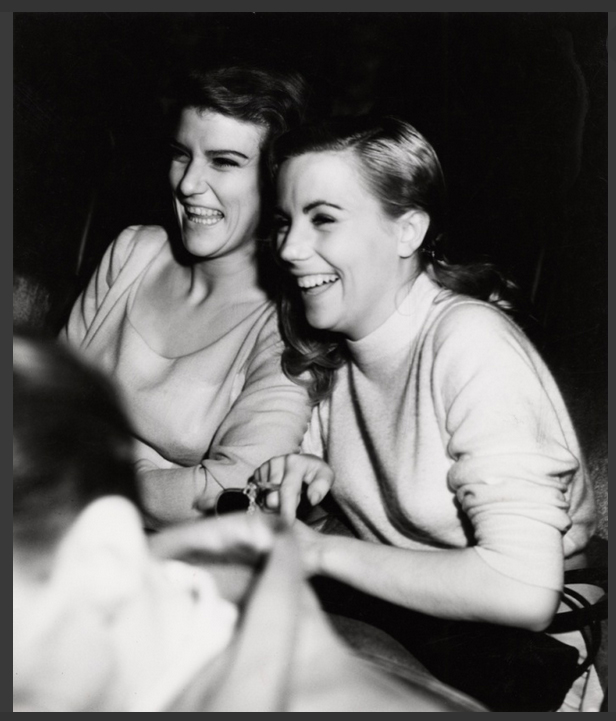
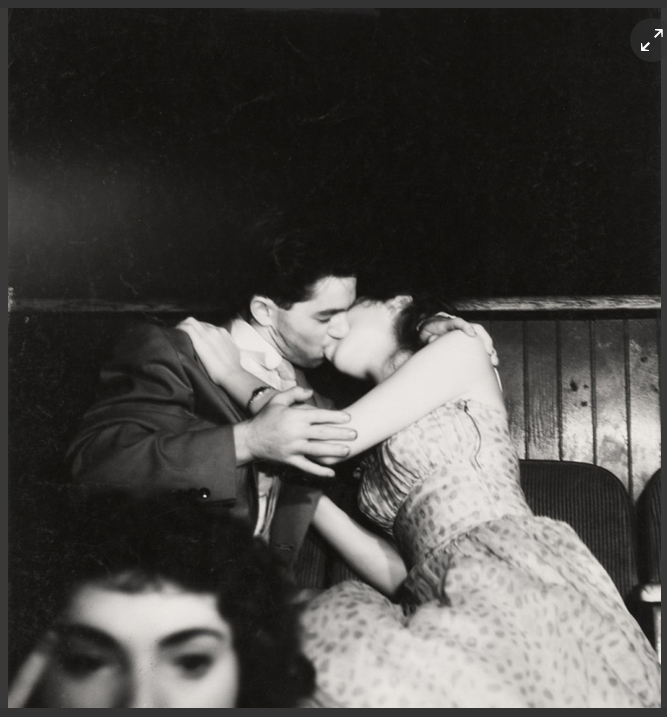
Weegee, ca. 1943
Screen shots from Guardian website
“Stolen kisses and naughty naps: Weegee goes to the movies – in pictures”
“He may be known as the best ambulance-chaser of the 30s and 40s, but Weegee didn’t only shoot crime scenes. He also drifted into the darkness and candidly captured cinema-goers in New York: gangs of giggling kids, sombre popcorn eaters and lovers in the back row.
See a selection at Bow Tie Chelsea Cinemas in New York until 13 June, 2015”
From Guardian website
Great exhibition of some of Weegee’s photos (modern digital prints) made in movie theaters in the early 1940s.
“Saturday afternoon show for the youngsters at Loews Commodore Theater on Second Avenue… [105 Second Avenue, New York, NY 10003… Fillmore East, etc. according to Cinema Treasures)… Some of the kids brought their lunch… lolly pops… and one fellow even brought a toy pistol… I took pictures in the dark with infra-red rays so that I wouldn’t disturb anyone…”
Weegee’s People, chapter 6.
Semi-secret and esoteric exhibition in NYC, on 23d St., near the Chelsea Hotel…
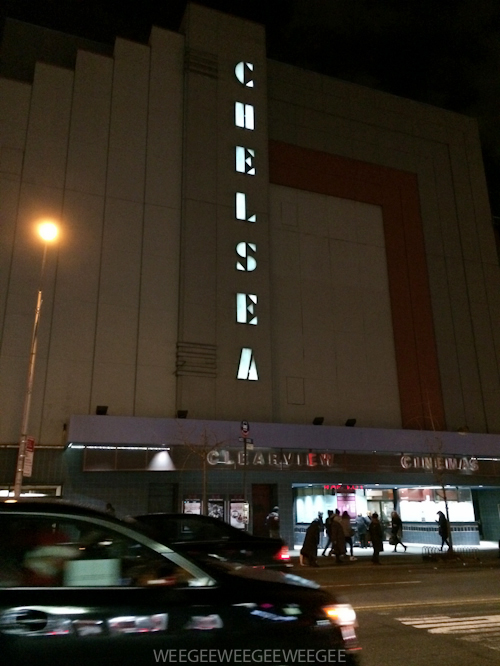
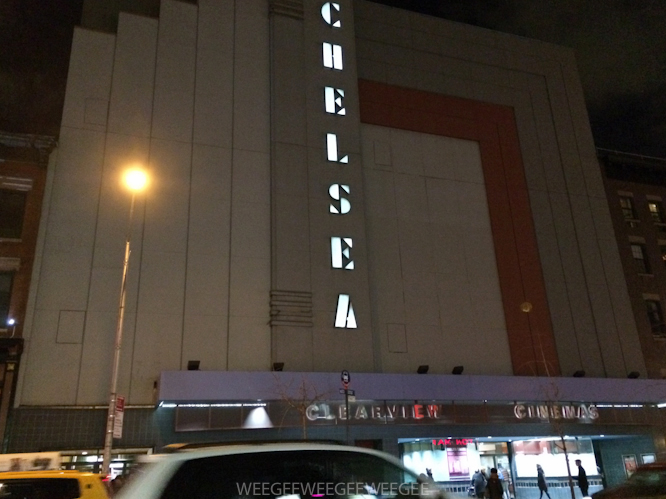
Location of exhibition, 23d St.
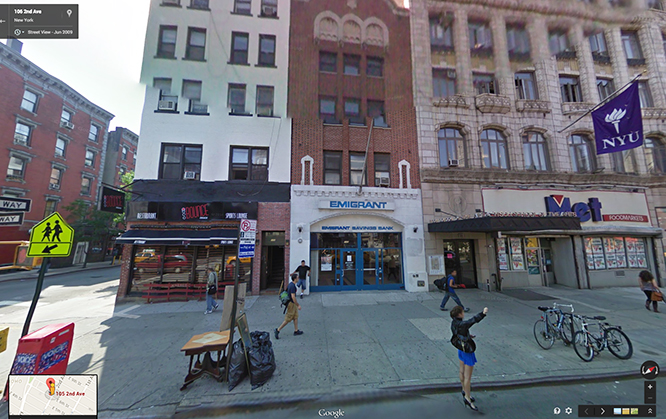
Google Street View of 105 Second Ave., NYC
 WEEGEEWEEGEEWEEGEE