“The Set Up” is playing this weekend (08/12-13/2011) at Film Forum… The highlight of a Robert Ryan retrospective.


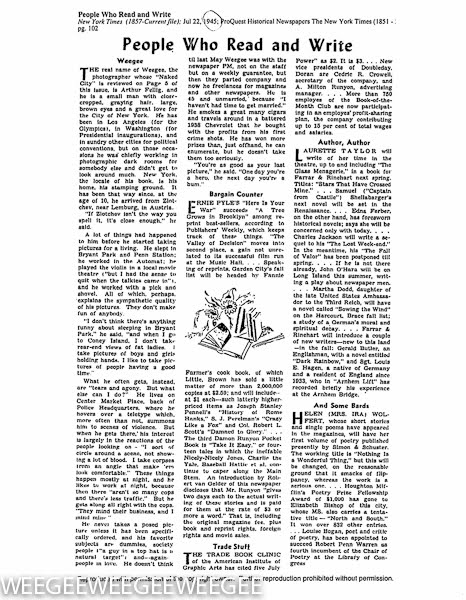
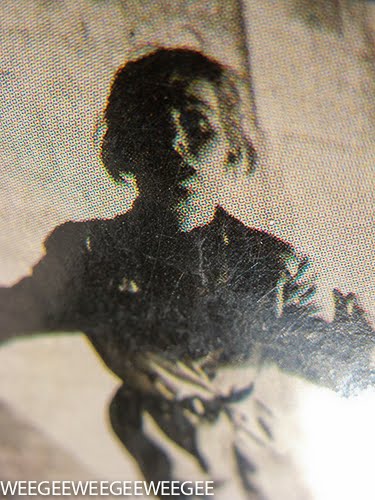
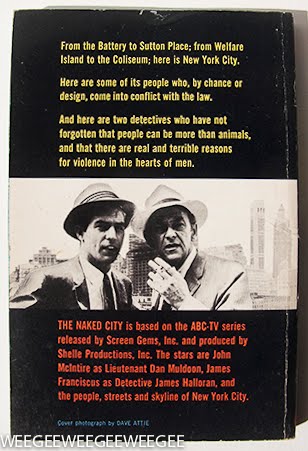
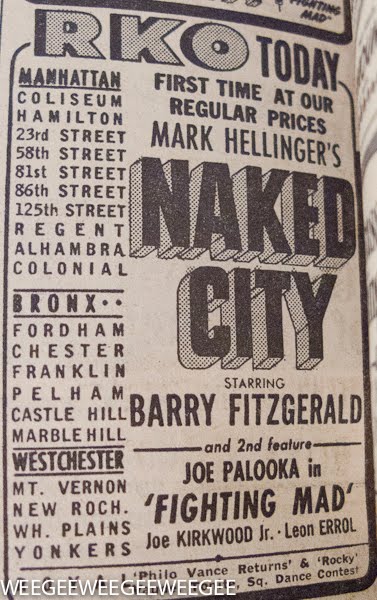
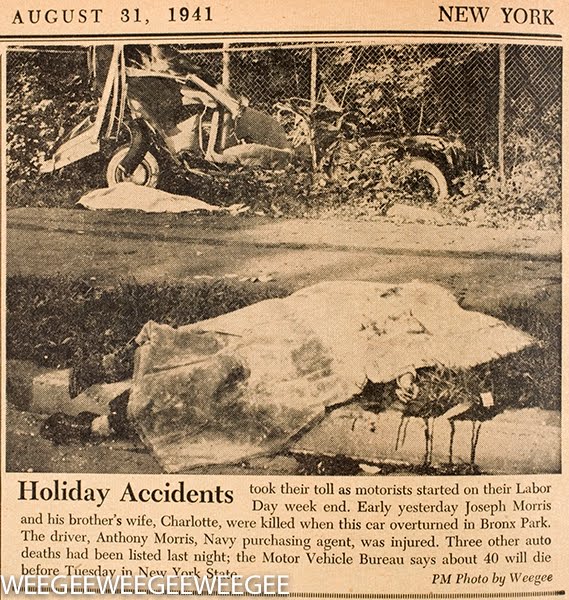
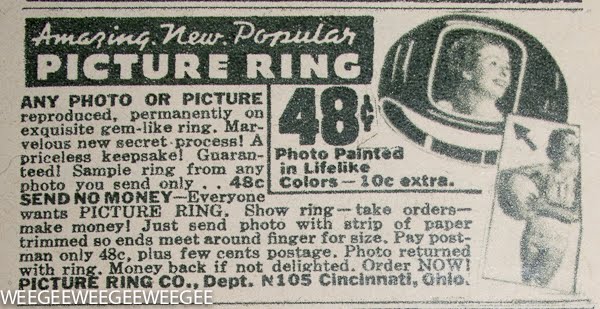
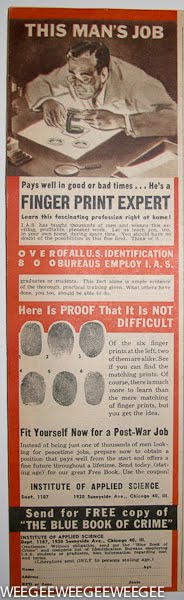
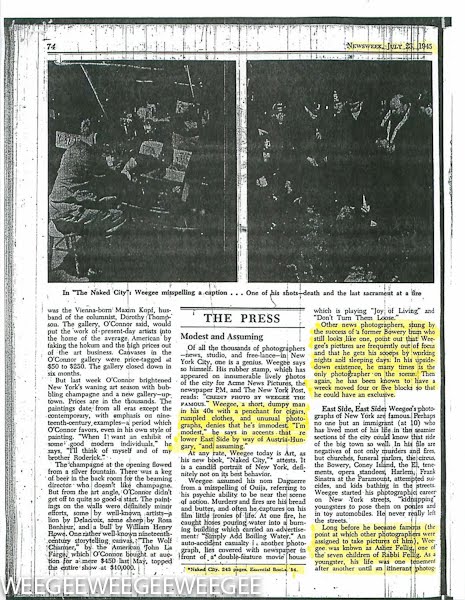
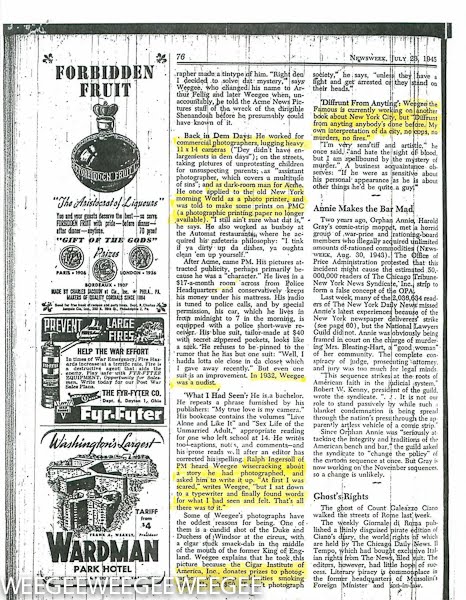
(A page from Weegee by Weegee.)

Two paragraphs from the NY Times website:

“Robert Ryan’s Quiet Furies”

By Manohla Dargis (Published: August 5, 2011)

Born to play beautifully tortured, angry souls, the actor Robert Ryan was a familiar movie face for more than two decades in Hollywood’s classical years, his studio ups and downs, independent detours and outlier adventures paralleling the arc of American cinema as it went from a national pastime to near collapse. A little prettier and he might have been one of the golden boys of the golden age. But there could be something a touch menacing about his face (something open and sweet too), which bunched as tight as a fist, and his towering height (he stood 6 foot 4) at times loomed like a threat. The rage boiled up in him so quickly. It made him seem dangerous…

He nurtured his social activism for most of his life, fighting for civil liberties and against nuclear armament…

Ryan made “The Set-Up,” one of his favorites and most indelible films, two years later. Directed by Robert Wise (who had edited “Citizen Kane”), “The Set-Up” is a tight, intensely moving, pocket-size masterwork about Stoker Thompson, a washed-up, 35-year-old heavyweight who believes he’s just “one punch away” from changing his lousy luck. Part redemption story, part romance (his wife is played by Audrey Totter), the film unfolds in close to real time and takes place in the cruelly named Paradise City. Ryan, all muscle, sinew and heart-rending longing, slugs through one punishing round after another — look for the photographer Weegee hitting the bell as the timekeeper — creating a portrait of a man who endures ghastly physical punishment on his way to redemption.

“The Set-Up” almost didn’t happen, having been canceled by Howard Hughes, who had bought a controlling interest in RKO in 1948…

From the Film Forum website:

THE SET-UP

(1949, Robert Wise) Unheralded “real time” experiment, as aging boxer Ryan turns down an invitation to take a dive, then pays the price. Approx. 72 minutes.

“A tight, intensely moving, pocket-sized masterwork. Ryan, all muscle, sinew and heart-rending longing, slugs through one punishing round after another — look for the photographer Weegee

hitting the bell as the timekeeper — creating a portrait of a man who endures

ghastly physical punishment on his way to redemption.”

– Manohla Dargis, The New York Times

“ONE FOR THE TEN BEST LISTS! This is the boxing movie to lick all others, with Ryan impeccable as the ageing fighter gearing up for a bout he’s expected to lose… Great blue moments in black-and-white from a director whose early work is still outstanding: the film burns with the humanity that Raging Bull never quite achieves, an expression of masochism mixed with futile pride that is the essence of boxing as a movie myth.”

– Time Out (London)

“The first half of Robert Wise’s boldly drawn film, set mostly in the ring’s warm-up room, captures in miniature Stoker’s (Robert Ryan) life as a whole until that moment: one long wait for the fight that will change everything. And then it’s happening—success, or failure—in front of everyone choreographed by lank former university champ Ryan and enacted before a vividly realized avid crowd, the bout is edited into an exhausting sequence. By the end, we feel his experience in our own muscles.”

– NicolasRapold, Artforum

“Hard to forget. Ryan–his face never more craggily heroic than in defeat–raises the picture above its poetry-of-realism aspirations.”

– Pauline Kael

“The fight, seen round by round, is the most savage ever filmed… An excellent example of studio-built realism.”

– Richard Winnington

“Bob caught all the nuances of guts and shattered hopes, and small-time aspirations of a never-was beating the hell out of the desperation of being a club fighter.”

– Samuel Fuller


PM Daily, July 28, 1941


PM Daily, July 30, 1941


PM Daily, July 31, 1941

1941 was Weegee’s most productive year… Weegee was on fire, and unfortunately so was parts of lower Manhattan… Weegee had almost a dozen amazing photos published on three nights in July 1941…

to be continued…


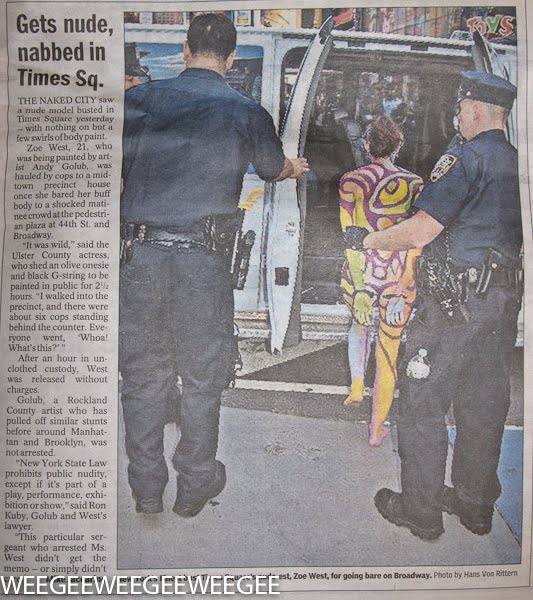
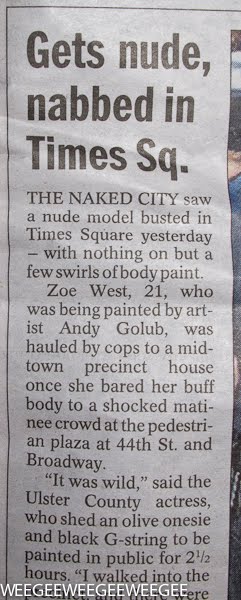
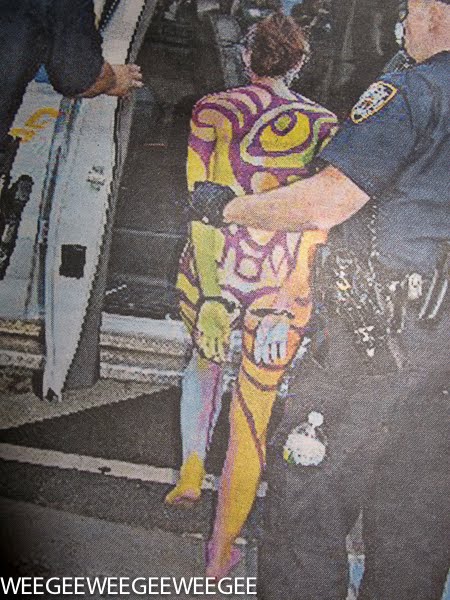
Daily News, July 8, 2011


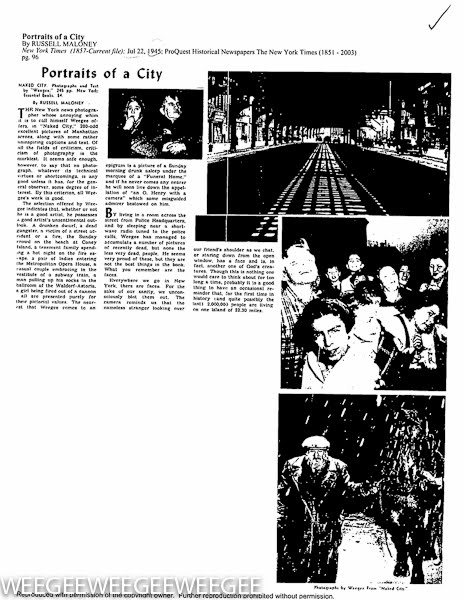
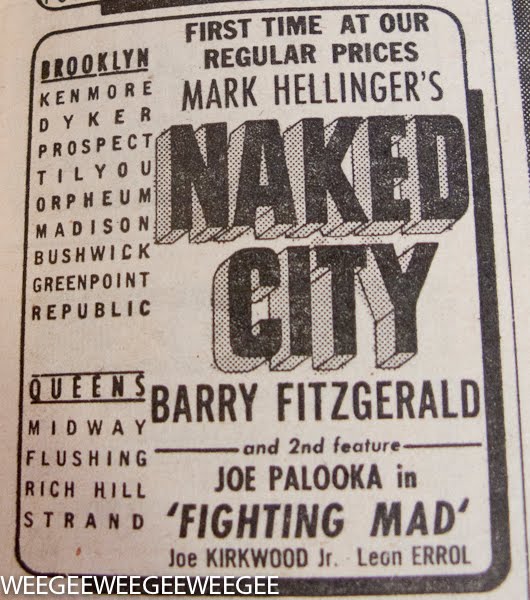
Weegee, Naked City, p. 161

“Every morning the night’s “catch” of persons arrested is brought down from the different police stations to Manhattan Police Headquarters where they are booked for their various crimes, fingerprinted, “mugged,” in the rogues gallery… and then paraded in the police line-up”
Weegee, Naked City, p. 160


Weegee and Mel Harris, Naked Hollywood, 1953

Kenneth Anger, Hollywood Babylon, 1975


Hollywood Babylon


Naked Hollywood


Hollywood Babylon


Naked Hollywood


Hollywood Babylon

Weegee and Mel Harris, Naked Hollywood, 1953

Kenneth Anger, Hollywood Babylon, 1975

Spheres of Influence…

…probably not, but there are interesting connections and coincidences… Anger’s Magick and Weegee’s Psychic…

…share some of the same targets… end of the real…

TO BE CONTINUED…


Weegee, [Moondog], The Village


Moondog, Viking of 6th Ave., liner notes

Continuing the Weegee and music theme…

To copy myself, nonsense created for something/somewhere else:

About two years before Louie Hardin became Moondog (in memory of a pet dog), he was attending daily rehearsals of the Philharmonic in Carnegie Hall (after befriending conductor Artur Rodzinski) and living in the top room of a brownstone on 56th Street, (between 8th and 9th Avenues). Hardin came to Manhattan in November 1943 after studying music in Iowa and Memphis. He was born on May 26, 1916 and died September 8, 1999.


PM Daily, January 19, 1945, p. 13 (photo by John De Biase)

A fascinating profile of Hardin by Natalie Davis, published in PM Daily, January 19, 1945, p. 13 concludes:

Did he have any plans for the next years?
He squatted on the sleeping bag again and laughed. “I’m going to write music,” he replied. “I’m going to write my fool head off.”
Did he see many people? Did he have plenty of friends?
“Oh, yes. I meet people all the time.” He threw back his head again, and laughed. “I’m somewhat of a wolf. I know many women. But my life is lonely. I have to maintain a certain independence, and put everything into my music.”
We stood up to go, and he stood up too. As we walked down the flights of stairs we asked what his favorite piece of music was.
“Mozart’s G Minor Symphony,” he said immediately.
Why?
He paused on the steps. “It seems to me a perfect blend of the classic and romantic ideal.”
Did he wish sometimes that he had been born in ancient or medieval times where he could find romance?
“No,” he said earnestly. “You can be yourself in any age. You don’t have to follow the herd.”

Moondog to his credit wasn’t fond of the Christ-like reported likeness. In the liner notes to a 2005 CD, The Viking of Sixth Avenue, Moondog commented on the PM profile:

When I first got to New York they wrote me up as “a man with the face of Christ.” I put up with that for a few years, then I said I don’t want that connection, I must do something about my appearance to make it look un-Christian.” And so Moondog became a Nordic warrior; complete with spear and horned helmet: “the Viking of Sixth Avenue.”


PM Daily, January 19, 1945, p. 13 (text by Natalie Davies and photo by John De Biase)

About six years after Arthur Fellig became Weegee (in memory of a faddish game), Weegee, also a single-named individualist, expressed a similar idea in a March 9, 1941 issue of PM:

Most photographers always use the same old methods. We’ll assume that a horse-drawn wagon is going over the Williamsburg Bridge. A car hits it and the driver is tossed into the water and gets killed. The other photographers will take a picture of the bridge and then have an artist draw a diagram showing how the guy fell into the water. What I do is go and see what happened to the poor old horse…
One time one of the newspapers assigned me to a three alarm-fire… I came back with a picture of a monster whale that had drifted into Sheepshead Bay. I got the whale picture exclusive.
A photographer should have confidence in himself and if he gets a good idea he should take it, even if everybody laughs at him (or her).