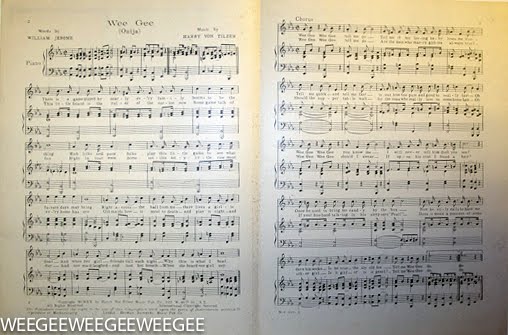
Wee Gee
(Ouija)
Words by William Jerome
Music by Harry Von Tilzer

There is a game played by nearly every family. Seems to be the thing. Rich and poor folks play this little game to see what future days may bring.
Right across the hall from me… there lives a girlie dear. And when her girl friends call each night… Why this is what I hear?
Wee Gee, Wee Gee tell me do… Tell me if my loving baby loves me true… Tell me quick and tell me fast is our love too pure and good to really last…
Oh Wee Gee, Wee Gee you know me… I will never tell him don’t you see?
Once he used to bring me candy by the box… Now he only calls to have me darn his socks… Is he true, the sly old fox…
Tell me Wee Gee do… do…

This little board is the ruler of the nation now. Some game talk of fun. Right in your own home settles any little row most every home has one.
Old maids love it most to death and play it night and day. And one maid laughed and lost her breath. When she heard one girl say.
Wee Gee Wee Gee tell me do… Are the men who marry girlies always true? Should the supper table wait for the ones who really love to come home late…
Oh Wee Gee Wee Gee should I swear.. If up on his coat I found a hair? If your husband talking in his sleep says “Pearl… Does it mean a present or some other girl.. Is it girl or is it Pearl?
Tell me Wee Gee do… do…

Entirely irrelevant… (not a song about President Hoover’s pooch: “President Hoover was so pleased with his first elkhound Weegee, that it was decided to get two more elkhound pups. The White House phoned the office of the gentleman in N. Y. who had supplied the first one…” – New Yorker…)

to be continued…

…from the GeorgeEastmanHouse! Notes on Photographs…

Main Weegee page…

Bibliography
Books by Weegee:
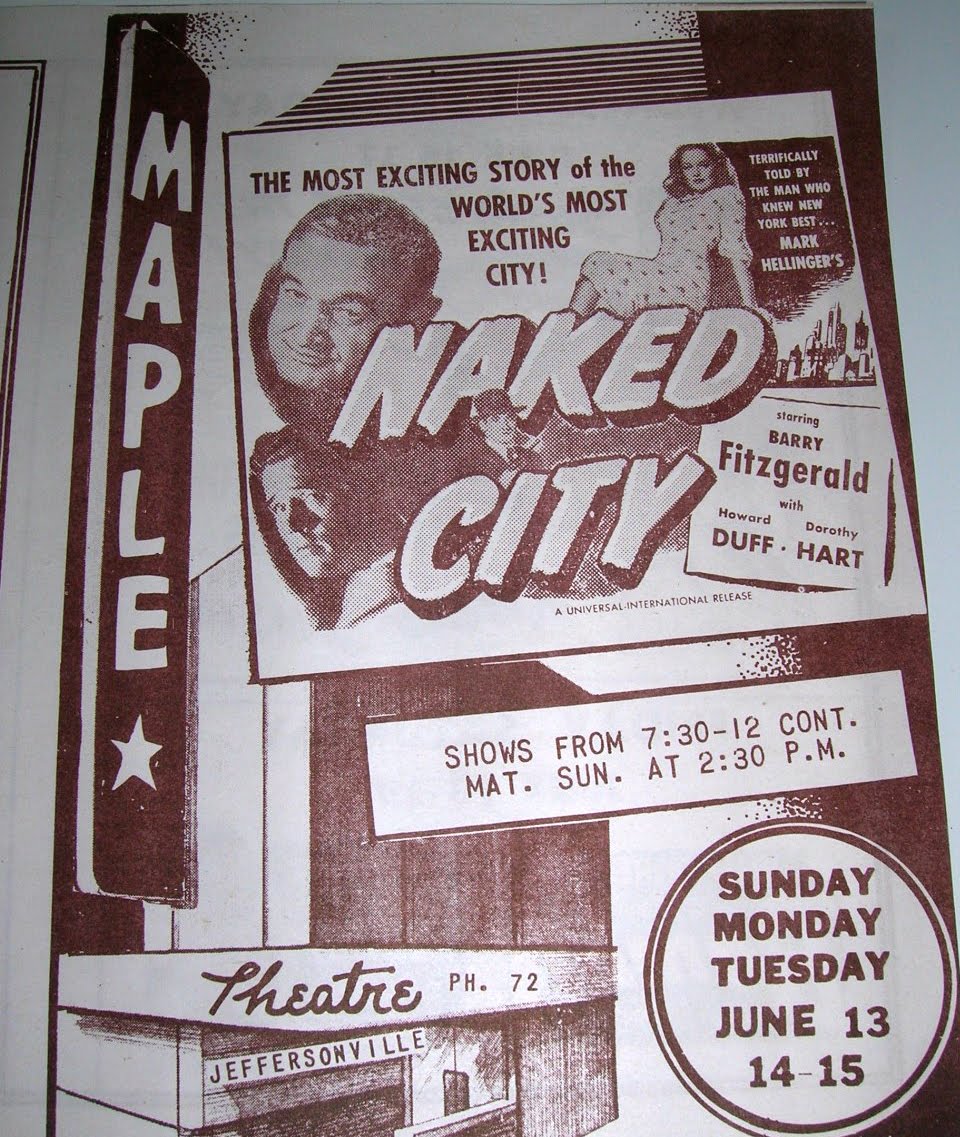
Naked City. New York: Essential Books, 1945. Reprint, New York: Da Capo Press, 1975.
Weegee’s People. New York: Essential Books, 1946. Reprint, New York: Da Capo Press, 1975.
Naked Hollywood. With Mel Harris. New York: Pellegrini & Cudahy, 1953. Reprint, New York: Da Capo Press, 1975.
Weegee’s Secrets of Shooting with Photoflash as Told to Mel Harris. New York: Designers 3, 1953.
Naked Hollywood. With Mel Harris. New York: Berkeley Publishing Group, 1955. [Slightly different picture selection than the 1953 edition.]
Weegee’s Creative Camera. With Roy Ald. Garden City, NY: Hanover House, 1959.
Weegee, by Weegee: An Autobiography. New York: Ziff-Davis, 1961. Reprint, New York: Da Capo Press, 1975.
Weegee’s Creative Photography. With Gerry Speck. London: Ward, Lock, 1964.
The Village. New York: Da Capo Press, 1989.

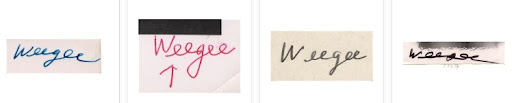
Signatures

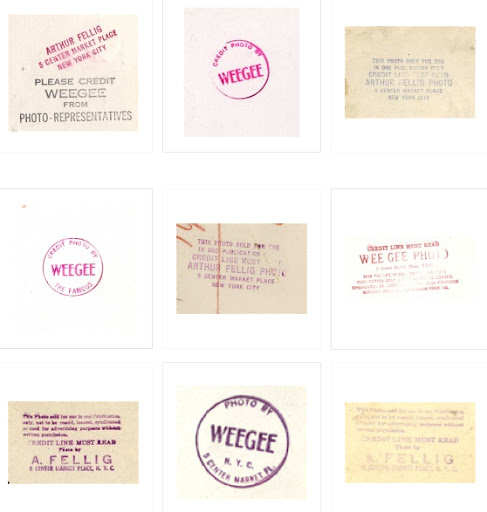
Stamps


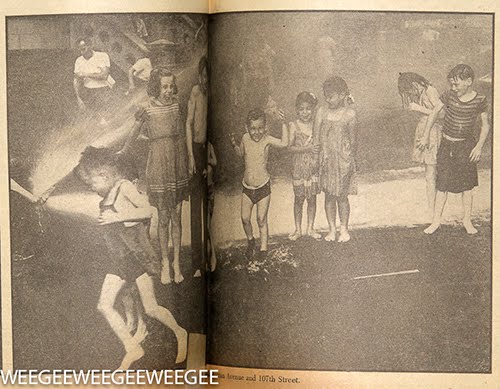
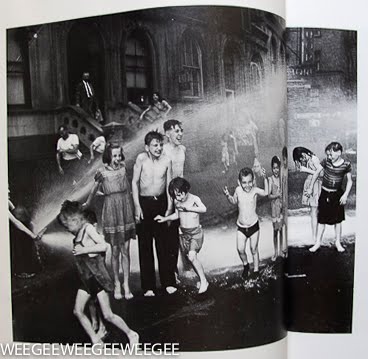
PM Weekly, November 10, 1946, Vol. 7, No. 123, pp. m10-11


PM Weekly, November 10, 1946, Vol. 7, No. 123, pp. m10-11
“Weegee’s People at Manhattan Avenue and 107th St.”


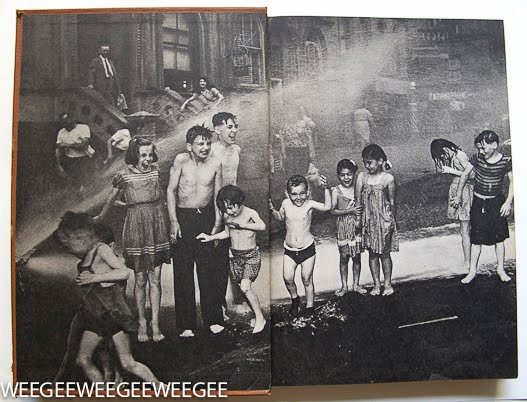
Weegee’s People, 1946


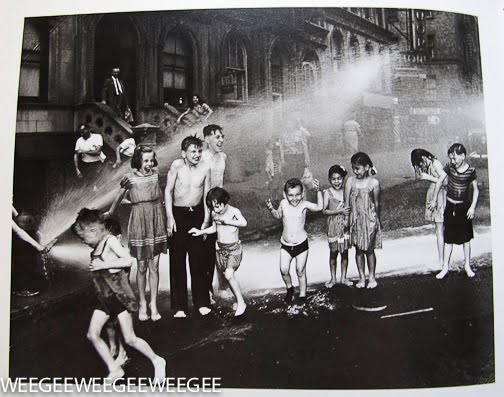
Weegee The Famous, 1977, “Summer, the Lower East Side, 1937,” pp. 42-43


Weegee’s New York, “Summer on the Lower East Side…, 1937,” p. 178


Weegee’s World, “Summer, the Lower East Side, ca. 1937,” pp. 48-49

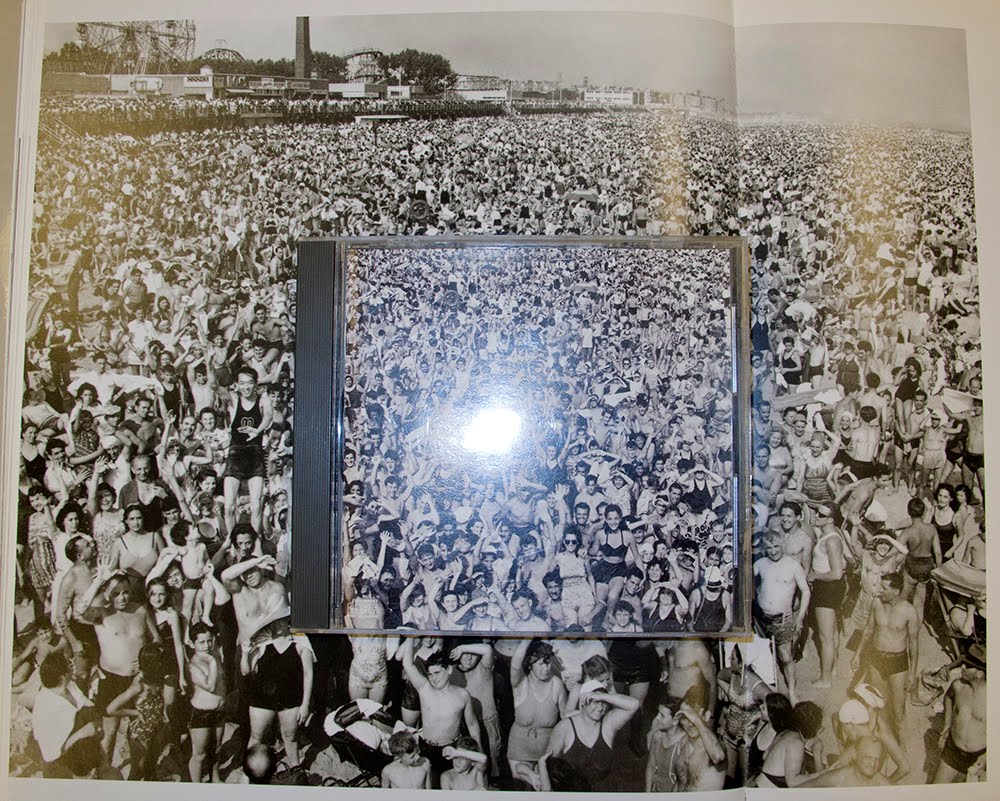
Where and when was this photo made?

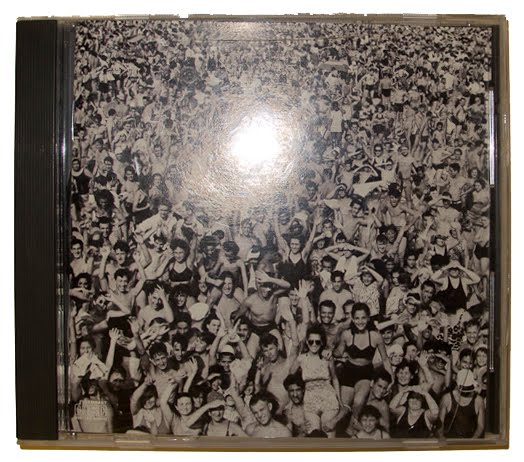
Wee are still tracing its publication history (it’s funny how some of Weegee’s most famous and iconic photos have ambiguous origins, like Simply Add Boiling Water)…. perhaps the first publication was in PM, November 10, 1946, (in a publication – Weegee’s People – announcement) and perhaps the second publication was as the untitled front endpaper for Weegee’s People, November 1946.

In Louis Stettner’s 1977 Weegee the Famous (pp. 42-43) the title is “Summer, the Lower East Side, 1937. (Of course many of the titles and dates are incorrect in this otherwise great book.)
In the 1982 Weegee’s New York, “Summer on the Lower East Side…” p. 178, is juxtaposed with “… a cop stops the fun, 1937” p. 179.
(The photo on page 179 was made on the Lower East Side, and probably has nothing to do with the photo on page 178, “Summer on the Lower East Side…”) (Of course many of the titles and dates are incorrect in this otherwise great book.)
In Weegee’s World, the photo appears as “Summer, the Lower East Side, ca. 1937” following a few images of people sleeping on fire escapes… and it is the oldest photo in the Lower East Side chapter (or the one with the earliest date), with two photos dated ca. 1939, and one or two from 1940.

Most of the photos in Weegee’s People were made in 1945 and 1946.
Some were published in PM, some might have been published elsewhere, and some were previously unpublished.
Wee don’t think there are any photos in Weegee’s People that were made in the 1930s.

Perhaps the photo was made in the summer of 1946, or the summer of 1945.
And perhaps it was not made in the Lower East Side, (the architecture in the background doesn’t look like the Lower East Side) perhaps it was made around Manhattan Ave. and 107th St.

In a 1946 caption the photo has the title: “Weegee’s People at Manhattan Avenue and 107th St.

(I don’t think it was made exactly here, Manhattan Ave, and 107th St., but there’s an amusing coincidence, that there’s a guy on a fire hydrant…)

These pictures are from Weegee’s People (Duell, Sloan, Pearce, $4), which will be published on November 11. Weegee says of the new book. “Unlike my previous book, Naked City, this is New York in a happier and gayer mood. I went looking for beauty and found it. My formula – dealing as I do with human beings, and I find them wonderful – leave them alone and let them be themselves – holding hands with love-light in their eyes-sleeping-or merely walking down the street. The trick is to be where people are.” Weegee’s next venture will be movie-making”
PM Weekly, November 10, 1946, Vol. 7, No. 123, pp. m10-11

And so it was…

TO BE CONTINUED!

Two great blog posts from The Daily Worker Photographs Collection blog:

“Finding Weegee”
http://blogs.nyu.edu/library/sp.collections/2011/06/finding_weegee.html

“Credit Weegee the…Daily Worker Photographer?”
http://blogs.nyu.edu/library/sp.collections/2011/06/credit_weegee_thedaily_worker_1.html

“One day I saw my pictures printed both in the Jewish Daily Forward and the Daily Worker. They had been sent out by the Hearst mat service. I rushed back to the Mirror office and asked if these were Hearst papers, too. I collected an additional five bucks for each… no argument.” Weegee by Weegee, p. 41

Slightly irrelevant:
“…New York University is tearing down all the old buildings and putting up more classrooms so they can teach Ceramics, Square Dancing, and primitive Painting a la Grandma Moses. (Where do they get all the money?) The old landmarks are going the way of all brick – threatening a severe shortage of cold water flats.
But there is a counter movement…to move N.Y.U. out to the Yucca Flats in the Arizona Desert so the soldier boys can practice dropping H-bombs. On the site of N.Y.U. will be erected cold water flats, the greatest blessing to modern civilization…”
Weegee, The Village, 1989

Weegee’s coverage of Frank Sinatra at the Paramount in 1944 was featured in a series of articles in the Guardian about “key events in the history of pop music” by JonSavage:

“The Columbus Day riot: Frank Sinatra is pop’s first star” by JonSavage

A brief excerpt:

“On 12 October 1944, Frank Sinatra opened his third season at New York’s Paramount theatre. It was Columbus Day, a public holiday, and the bobby-soxers turned out in force. The famed New York photographer Weegee (Arthur Fellig) was there with his camera and notebook, capturing the scene in hyperventilated prose.
“Oh! Oh! Frankie,” he began, mimicking the girls’ ululations. “The line in front of the Paramount theatre on Broadway starts forming at midnight. By four in the morning, there are over 500 girls … they wear bobby sox (of course), bow ties (the same as Frankie wears) and have photos of Sinatra pinned to their dresses …
“Then the great moment arrived. Sinatra appeared on stage … hysterical shouts of ‘Frankie … Frankie’; you’ve heard the squeals on the radio when he sings. Multiply that by about a thousand times and you get an idea of the deafening noise.”
For Weegee, this was another example of the human extremities that he documented with his instinct for the climatic moments in New York life: what he didn’t mention was the fact that, after each performance, the Paramount was drenched in urine…”

Weegee quotes from Naked City, pp. 112-115. Urine?

http://www.guardian.co.uk/music/2011/jun/11/frank-sinatra-pop-star

A screenshot: