

Courier Express, August 2, 1947, p.6
Tag Archives: Naked City
“…covered with newspapers …”
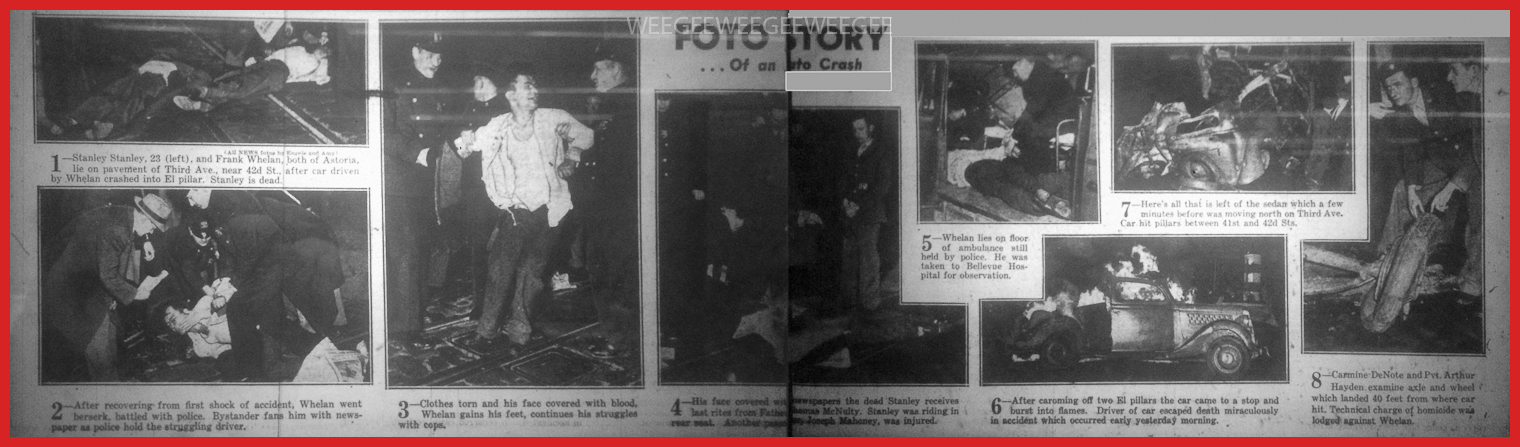
NY Daily News, April 17, 1942 (All NEWS fotos by Engels and Amy)
1. Stanely Sandler, 23, and Francis Whelan, 32, both of Astoria, lie on pavement of Third Ave., near 42d St., after car driven by Whelan crashed into El pillar. Sandler is dead.
2. After recovering from first shock of accident, Whelan went berserk, battled with police. Bystander fans him with newspaper as police hold the struggling driver
3. Clothes torn and his face covered with blood, Whelan gains his feet, continues his struggles with cops, who hold him firmly.
4. His face covered with newspapers, the dead Sandler receives last rites from Father Thomas McNulty. Sandler was riding in rear seat. Another passenger, Joseph Mahoney, was injured.
5. Whelan lies on floor of ambulance, still held by police. He was taken to Bellevue Hospital for observation.
6. After caroming off two El pillars the car came to a stop and burst into flames. Driver of car escaped death miraculously in accident, which occurred at 5 o’clock yesterday morning.
7. The fire’s been put out and here’s all that remains of the car. It hit pillars between 41st and 42d Sts. while making U-turn.
8. Carmine DeNote and Pvt. Arthur Hayden examine axle and wheel which landed 40 feet from where car hit. Technical charge of homicide was lodged against Whelan.
New York Daily News, April 17, 1942
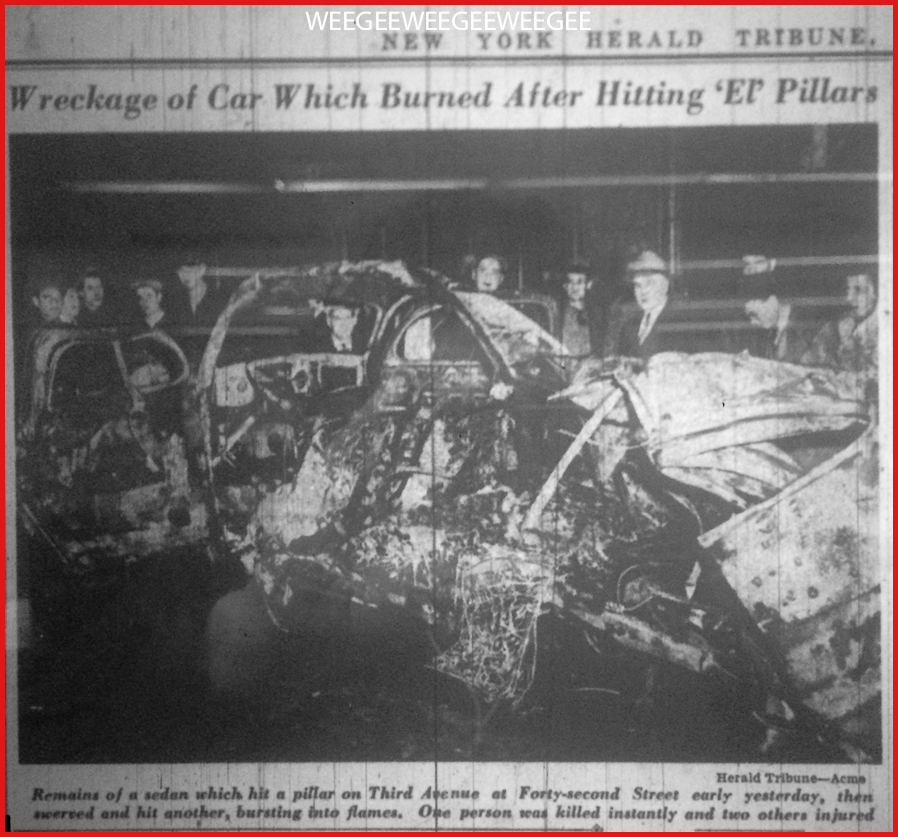

New York Herald Tribune, April 17, 1942 (Herald Tribune – Acme)
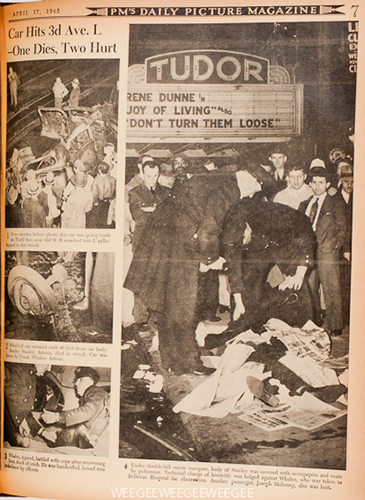
PM, April 17, 1942, p.7 (No photo credit)
1. Few minutes before photo, this car was going north on Third Ave., near 42d St. It smashed into L pillar, burned to this wreck.
2. Wheel of car rammed curb 40 feet from car body. Stanley Stanley, Astoria, died in wreck. Car was driven by Frank Whalen, Astoria.
3. Whalen, injured, battled with cops after recovering from shock of crash. He was handcuffed, forced into ambulance by officers.
4. Under double-bill movie marquee, body of Stanley was covered with newspapers and coats by policeman. Technical charge of homicide was lodged against Whalen, who was taken to Bellevue Hospital for observation. Another passenger, Joseph Mahoney, also was hurt.
PM, April 17, 1942, p.7

Weegee, Naked City, 1945, p.89
This man covered up with newspapers was killed in an auto accident. The driver of the car was arrested, but he put up such a terrific battle… cops had to put handcuffs on him.
Weegee, Naked City, 1945, p.89

Weegee, Weegee’s Secrets, 1953, p.32
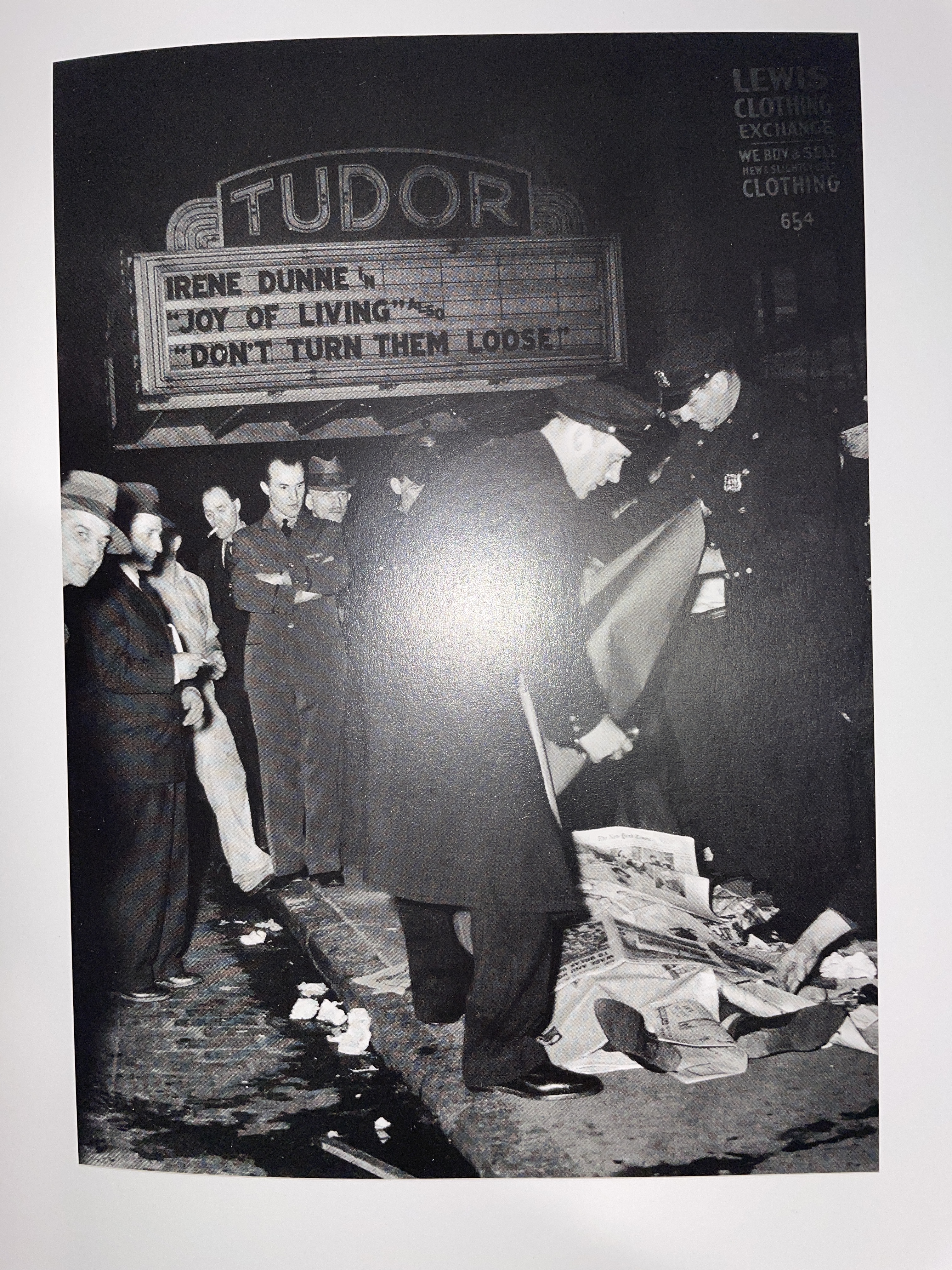
Weegee’s World, p.61 (Joy of Living, 1942)

Not the Naked City, p.89, 2015
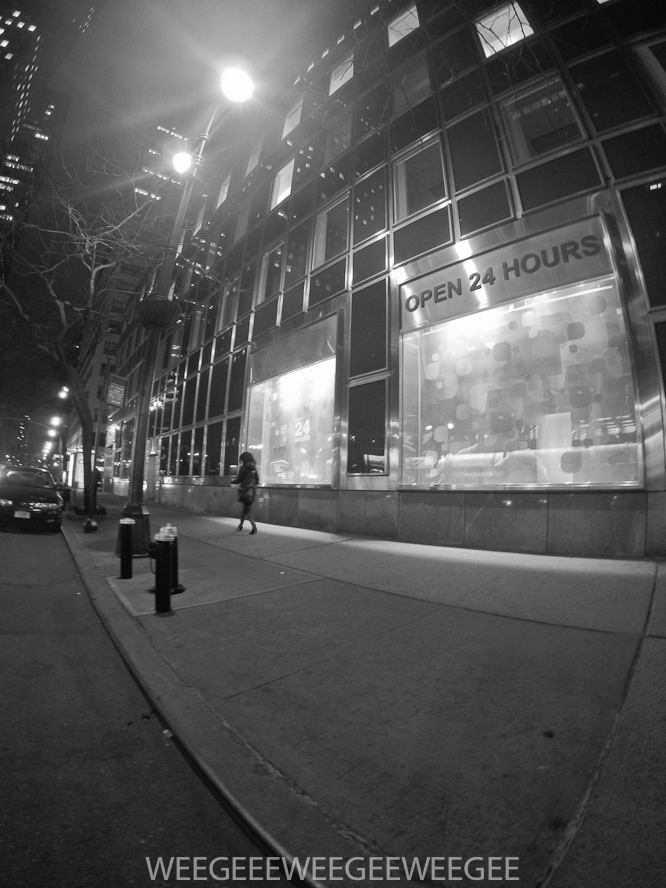
April 16, 2015
“Crazed By Accident”
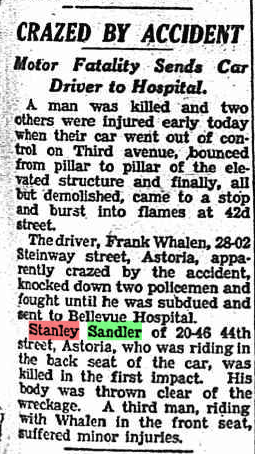
New York Sun, April 16, 1942, p.5
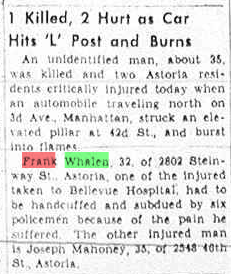
Brooklyn Eagle, April 16, 1942, p.2
“Heat-Wave Nocturne in Downtown New York”

Weegee, Herald Tribune, August 4, 1940
Heat-Wave Nocturne in Downtown New York
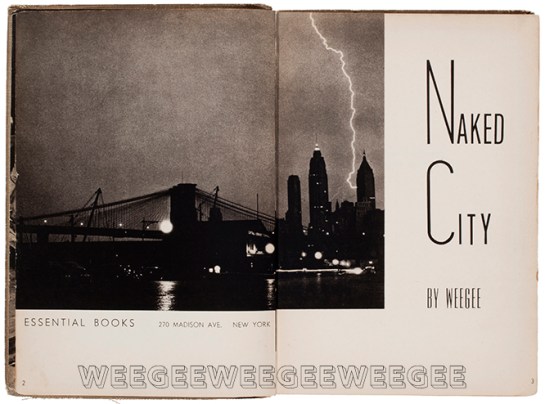
Weegee, “Naked City,” 1945
“…the picture became greater and greater…”

Jim Bishop, The Mark Hellinger Story, 1952, pp. 330-331
…He showed the producer a new picture book of New York City entitled The Naked City. The author of it was Weegee, a fat little cigar-smoking photographer who literally slept in his car near a short-wave radio. He picked up all the police calls and, because he was already on the road when an exciting call came in, Weegee very often was at the scene of a crime before the police. His book of photos was stark and hard…
…When Hellinger decided to use it he phoned Weegee. He explained that there was no value in the book, as such, for a motion picture. But that he liked the title. Instead of buying the name outright, Mark said, he’d put Weegee on the payroll at a hundred a week as still photographer for the period during which the picture was being shot. Weegee accepted. Hellinger explained that the photographer wouldn’t be expected to give up his regular daily work at all; in sum, the hundred [$100 in April 1947 had the same buying power as $1,408.30 in January 2024] a week would be side money…
Jim Bishop, The Mark Hellinger Story, 1952, pp. 330-331
Mark Hellinger (March 21, 1903 – December 21, 1947)
“…it’s Christmas.”
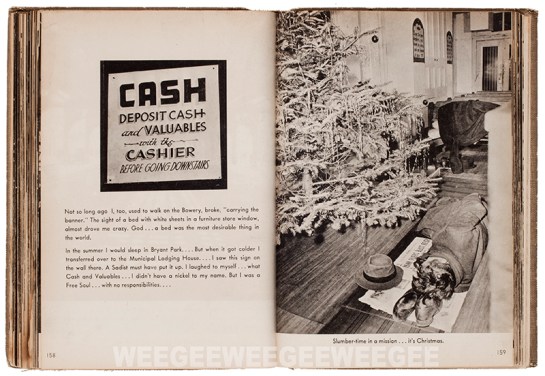
Weegee, Naked City, 1945, pp.158-159
Not so long ago I, too, used to walk on the Bowery, broke, “carrying the banner.” The sight of a bed with white sheets in a furniture store window, almost drove me crazy. God… a bed was the most desirable thing in the world.
In the summer I would sleep in Bryant Park… But when it got colder I transferred to the Municipal Lodging House… I saw this sign on the wall there. A Sadist must have put it up. I laughed to myself… what Cash and Valuables… I didn’t have a nickel to my name, but I was a Free Soul… with no responsibilities…
Slumber-time in a mission… it’s Christmas.

Weegee, Naked City, 1945, p. 159
“He and his cameraman even went into Bellevue Morgue…”

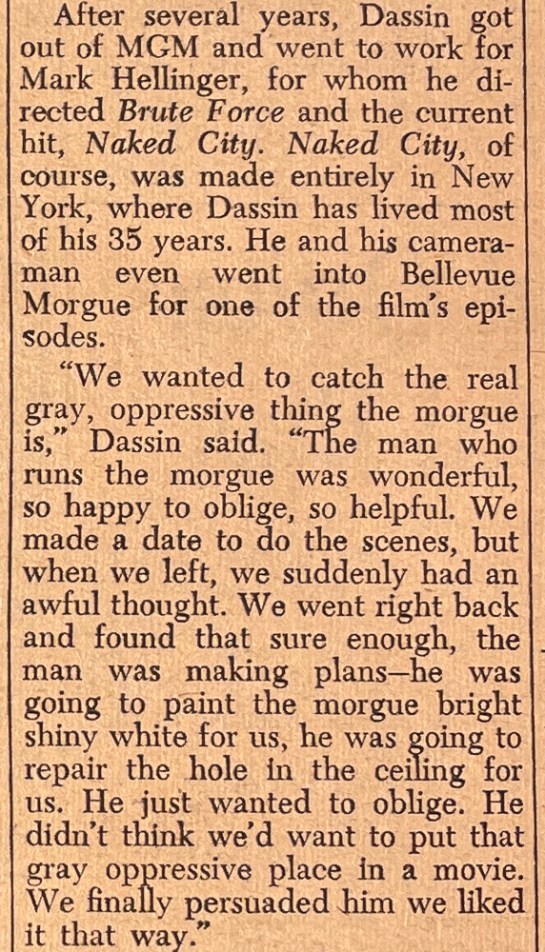
PM, March 9, 1948
Dassin Brings ‘Joy to the World”
by Seymour Peck

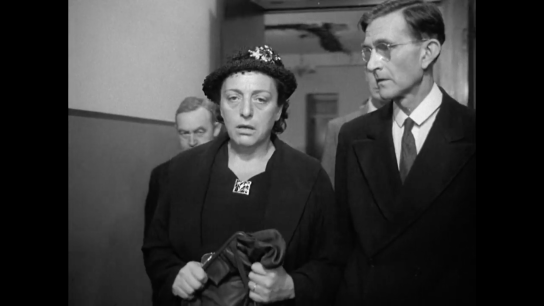
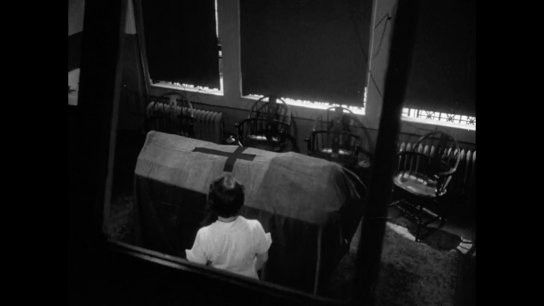
Screenshots, Naked City, (1948), (Bellevue morgue episode)
“Hellinger Film Is Love Song to NYC”


PM, March 5, 1948, pp. 15 and 16, Cecelia Ager
Hellinger Film Is Love Song to NYC
by Cecelia Ager
“Heat-Wave Nocturne in Downtown New York”
“Heat Wave”; Ethel Waters; Berlin; Columbia (2826-D); 1933
Weegee, Herald Tribune, August 4, 1940
Heat-Wave Nocturne in Downtown New York
Weegee, “Naked City,” 1945
“Heat Wave”; Marilyn Monroe; 20th Century-Fox Orchestra and Chorus; Irving Berlin; RCA Victor (20-6033); 1955
“Photography Casualties From N.Y.”
“When My Baby Left Me”; Cootie Williams and his Orchestra; Williams; Vinson; Eddie Vinson; Capitol (266); Publication date: July 19, 1945

The New York Post, July 19, p. 19
Photography
By John Adam Knight
Worth Anyone’s $4
[$4 in July 1945 had the same buying power as $65.48 in June 2022.]All of this is background for a brief review of a fine new picture book, Weegee’s “Naked City” (Essential Books, 243 pp., $4). This is Weegee at his former best, which means virtually unequaled. Most of these pictures were made before the Museum of Modern Art’s kiss of death took effect, and the purchaser need have little fear of being stuck with serious “art.”
What he will get for his $4 is a collection of grauvre reproductions of about 200 stark almost primitive photographs of death, despair and degeneracy in New York between midnight and morning. Though technically poor photographs, almost every one of them tells a gripping, human story, one of the best reasons I know for the invention of the camera.
The paper shortage denies me the pleasure of describing dozens of these pictures individually. I have space only to urge every one interested to buy the book and learn the lesson that Weegee once knew that honesty, a genuine interest in people – all people – and a recognition of what constitutes human interest in pictures can make any of you nearly as great as Weegee once was.
The New York Post, July 19, p. 19
“Echoes Of Harlem”; Cootie Williams And His Orchestra; Cootie Williams; Duke Ellington; Capitol (266); Publication date: July 19, 1945
 WEEGEEWEEGEEWEEGEE