Archive

Tag Archives: PM


(“Mexican Elections Heated Wind Up,” photos by Margaret Bourke-White)


“Rifftime,” Erskine Hawkins (The Twentieth Century Gabriel) and his Orchestra; Avery Parrish, Bluebird (B-11161-B), 1940
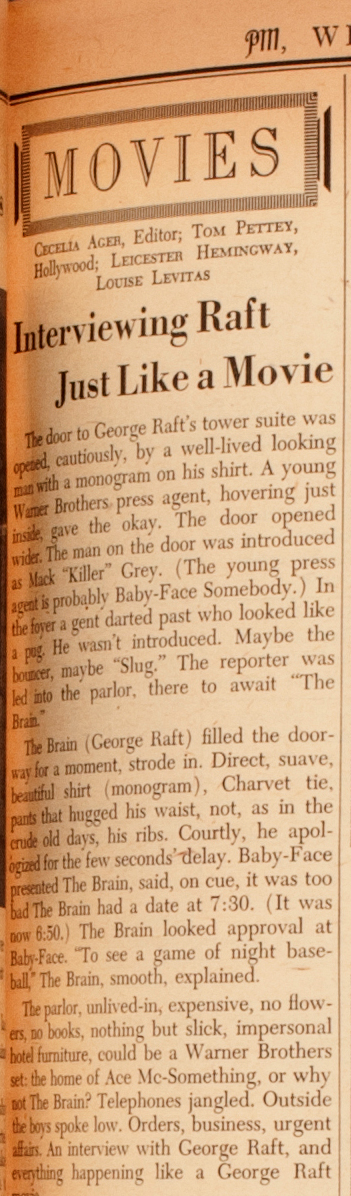
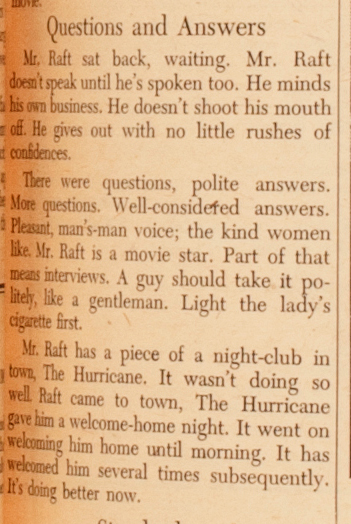
PM, July 3, 1940 (Interview by Cecelia Ager) [Raft was a close friend of Benjamin “Bugsy” Siegel, etc. etc…]


“I Smell a Rat,” “Young” Jessie And His Orchestra; “Young” Jessie; Stoller; Leiber, Modern Hollywood (921), 1954


“They Drive By Night,” 1940, associate producer, Mark Hellinger…

“They Drive By Night,” 1940, trailer

“Doctor Jazz,” Jelly-Roll Morton and his Red Hot Peppers; Joe Oliver; Jelly-Roll Morton; Omer Simeon; George Mitchell; Kid Ory; John Lindsay; Andrew Hilaire; Johnny St. Cyr , 1926


“Somebody’s Getting My Love,” Mabel Robinson; The 4 Blackamoors; Farrior; Nurse, 1941


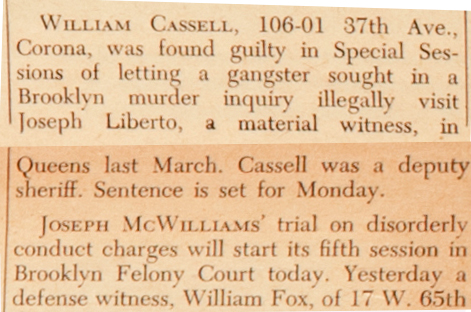
PM, July 2, 1940

[The “gangster sought in a Brooklyn murder inquiry” was Vito Gurino.]


“Doctor Sausage’s Blues,” Doctor Sausage And His Five Pork Chops; Doctor Sausage; Tyson, 1940


“Money Blues (If You Ain’t Got No Money, I Ain’t Got No Use for You),” Camille Howard And Her Boy Friends; F. Wray; B. Carter, 1951

“…We let love take its course…”


“Everybody’s Got Money,” Eddie Beale Fourtette; Gene Forrest; Forrest; Dolphin; Hollywood (172-AA), 1951

In July 1940 $688,369.00 had the same buying power as $13,236,106.64 in May 2021.
In July 1940 $265,000.00 had the same buying power as $5,095,476.79 in May 2021.


“PLEDGE TO THE FLAG,” Igor Gorin; Albert Hay Malotte, 1940


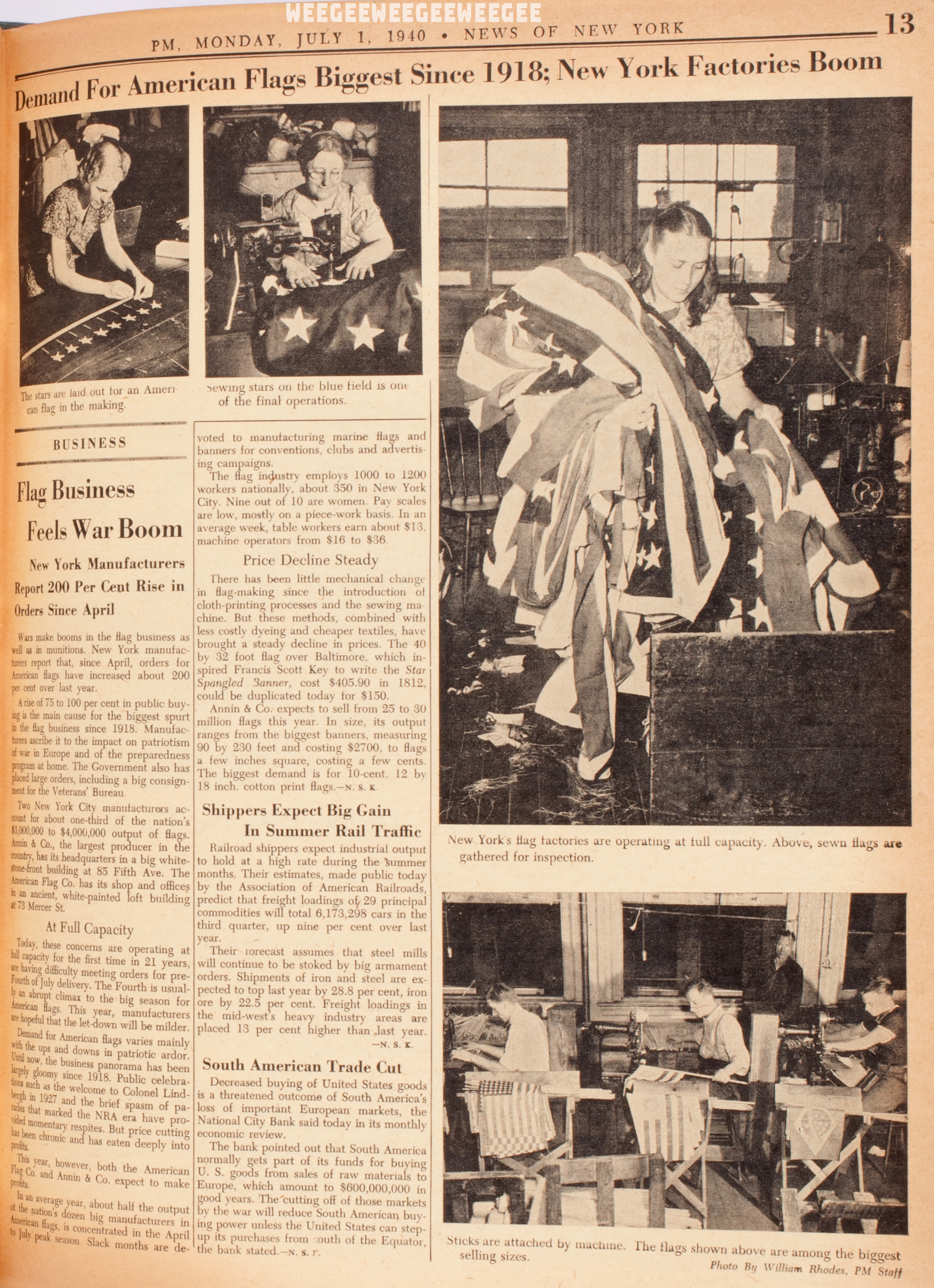
(Photos by William Rhodes)

Demand For American Flags Biggest Since 1918; New York Factories Book


“(a) PLEDGE TO THE FLAG (b) THE STAR SPANGLED BANNER,” by Leopold Stokowski; The All-American Orchestra; Key; Goddard Lieberson, 1940

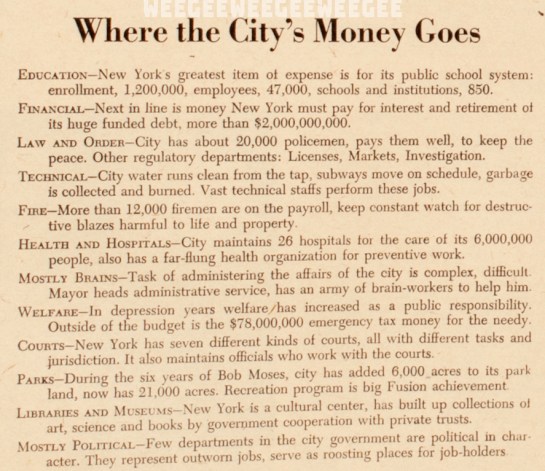
New York City Budget, 1940-21


“If Money Grew on Trees,” Eddie Rochester Anderson; Rene, 1940


“Money is Honey,” The Ramblers; O’Neil Spencer; Hopkins, 1939

Where the City’s Money Goes

PM, July 1, 1940


“Taxpayers’ Blues,” Bulee Gaillard and his Southern Fried Orchestra; Carroll; Gaillard; Norman Granz, 1952


“Street Scene,” Benny Carter Quintet; Norman Granz; Alfred Newman, 1952


PM, June 27, 1941, pp. 12-13

Street Scene In New York:
A Wild Kid in a Stolen Car
Knocks Over a Milk Wagon

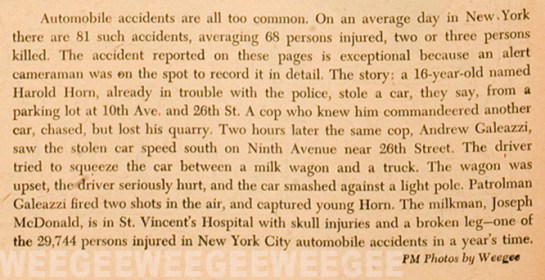
Automobile accidents are all too common. On an average day in New York there are 81 such accidents averaging 68 persons injured, two or three persons killed…

PM, June 27, 1941


(1) Car starting and running; (2) Screech of brakes and crash with women’s scream; (3) Crowd murmurs at scene of accident; (4) Ambulance Bell and Siren; (5) Surf)

The Durable Harold Horn
He Keeps Popping Up in Front of Cop

A drama in three acts… entitled: “If At First You Don’t Succeed Try, Try Again.”

Horn was booked on charges of grand larceny, driving without a license, leaving the scene of an accident, dangerous driving, and – inasmuch as Joseph McDonald, 24, of 352 50th St., Brooklyn, driver of the milk-wagon was injured in the crash – third degree assault.
The New York Post, June 26, 1941, p.4


“Milkman Polka,” Jolly Jack Robel And His Orchestra, 1941


“Wild Man Blues,” Louis Armstrong and his Hot Seven; Armstrong; Morton; Louis Armstrong; Kid Ory; Johnny Dodds; Lillian Hardin; Johnny St. Cyr; Pete Briggs; Baby Dodds, 1927


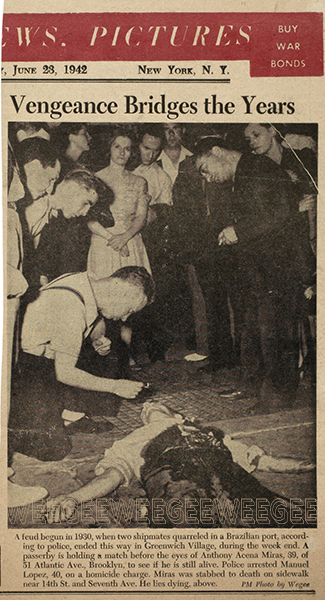
PM, June 23, 1942

Vengeance Bridges the Years

Feud begun in 1930, when two shipmates quarreled in a Brazilian port, according to police, ended this way in Greenwich Village, during the week end. A passerby is holding a match before the eyes of Anthony Acena Miras, 39, of 51 Atlantic Ave., Brooklyn, to see if he is still alive. Police arrested Manuel Lopez, 40, on a homicide charge. Miras was stabbed to death on sidewalk near 14th St. and Seventh Ave. He lies dying, above. PM Photo by Weegee


“It’s Murder,” Lil Armstrong And Her Swing Orchestra, Lil Armstrong, 1936


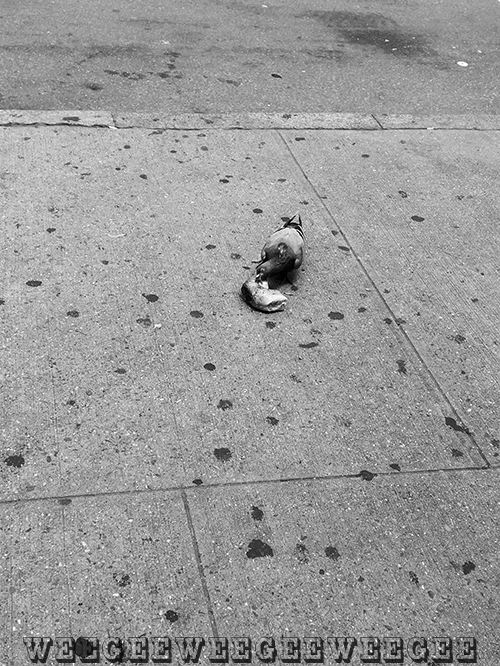
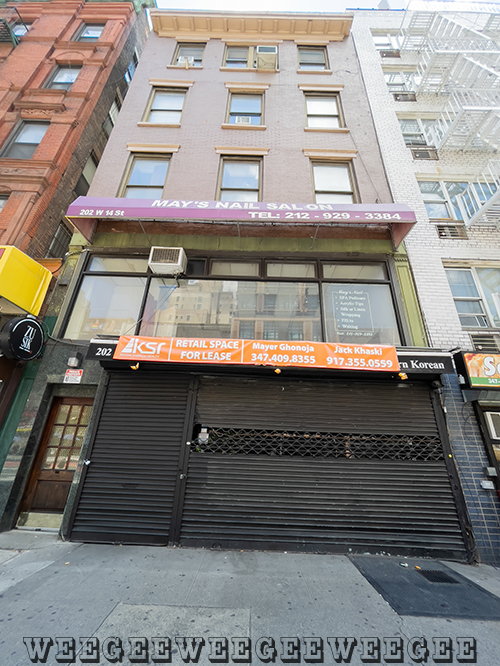
202 West 14th St., June 23, 2021


It’s Hard To Be Shut Up In Prison,” The Blind Soldier, David Miller, 1931

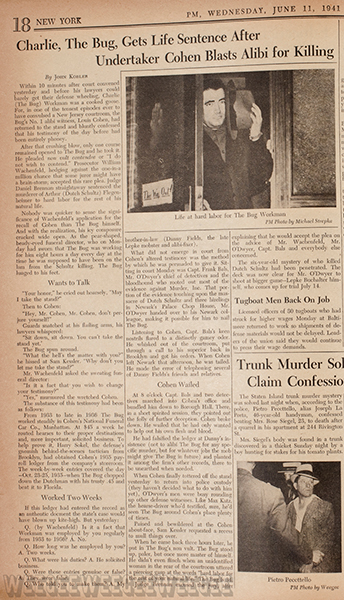
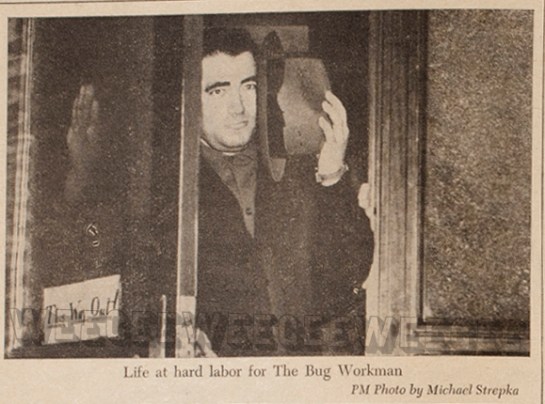
Charlie, The Bug, Gets Life Sentence After Undertaker Cohen Blasts Alibi for Killing

By John Kobler

Within 10 minutes after court convened yesterday and before his lawyers could barely get their defense wheeling, Charlie (The Bug) Workman was a cooked goose…

The six-year-old mystery of who killed Dutch Schultz had been penetrated. The deck was now clear for Mr. O’Dwyer to shoot at bigger game – Lepke Buchalter himself, who comes up for trial July 14.


PM, June 11, 1941, p.18 (PM Photo by Michael Strepka)


Jail Bird,” Sonny Knight; Jack Collier Orchestra; Bruce Morgan, 1956


PM, March 2, 1941


Weegee (1899-1968) and Mary Margaret McBride (1899-1976), July 1945

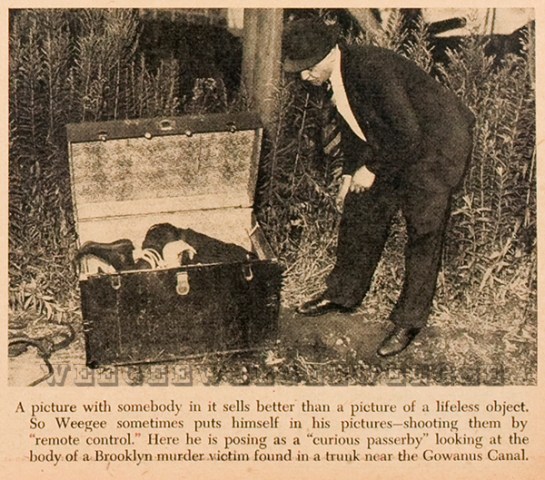
A picture with somebody in it sells better than a picture of a lifeless object. So Weegee sometimes puts himself in his picture-shooting them by “remote control.” Here he is posing as a “curious passerby” looking at the body of a Brooklyn murder victim found in t trunk near the Gowanus Canal.

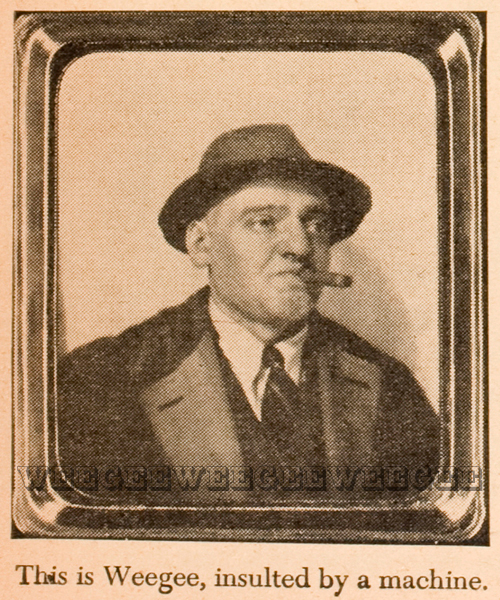
Weegee makes friends readily. On a Chinatown assignment, he got this New Year’s lucky wish from a Chinese girl. He has a photo of her painting ot pinned above his bed (picture on next page). It is characteristic of him to have his picture taken this way. The cigar is standard equipment.

Weegee’s room shows his devotion to his job. On top of his regular radio is a police short-wave radio and a loudspeaker attached to it dangles over his bed. On the floor are his special “murder shoes” – at left – and his “snow shoes.” He keeps his “fire shoes” in his car. The wall decorations are examples of his work and certificates of awards for prize-winning pictures. The cardboard boxes at the extreme right are his disorderly “files.” The typewriter is his latest acquisition. He has recently taken up writing – a field in which he shows rather starltinh talent. We don’t know what the Flit is for.

PM, March 9, 1941, pp. 50-51

Today we are celebrating the birth of Weegee!


“Hot Bread,” Beverly White And Her Blues Chasers; Ward Baker, May 1943


“Cool Breeze,” Billy Eckstine; Gene Ammons; Dameron; Gillespie, 1946

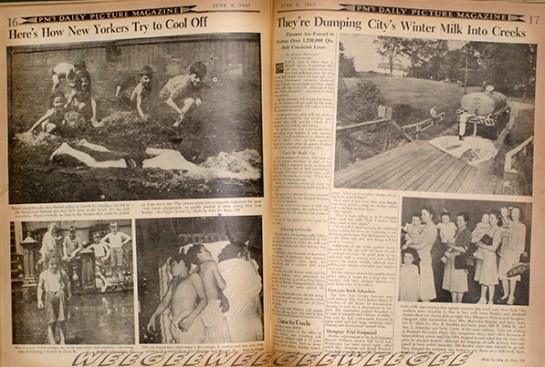
Here’s How New Yorkers Try to Cool Off

These youngsters play in a flooded gutter on Carrol St., Brooklyn, the lad in the foreground showing just how he’d swim at the beach. It’s fun, but unsanitary. There’s virtually no limit to the diseases that could be picked up from street dirt. This picture gives you a concrete argument for more – not fewer – playgrounds, so greatly needed to keep young New York healthy. Photo by John De Biase, PM

This is better. Water straight out of a hose won’t hurt anybody. The young man is enjoying a shower on Dean St. Photo by Arthur Leipzig, PM


PM, June 6, 1943, p. 16

Here’s How New Yorkers Try to Cool Off

The hot nights have filled many a fire escape. A mother and two sons sleep outdoors at a tenement on East Houston and Mangin St. Photo by Weegee
PM, June 6, 1943, p. 16


“Cool Playin’ Mama, “Sammy Cotton; Paul Gayten and his Orchestra; Biggs; Cotton, 1950


“Cool Down Mamma,” Lost John Hunter and His Blind Bats, Lost John Hunter; Hunter, 1950


PM, June 7, 1944, p.20

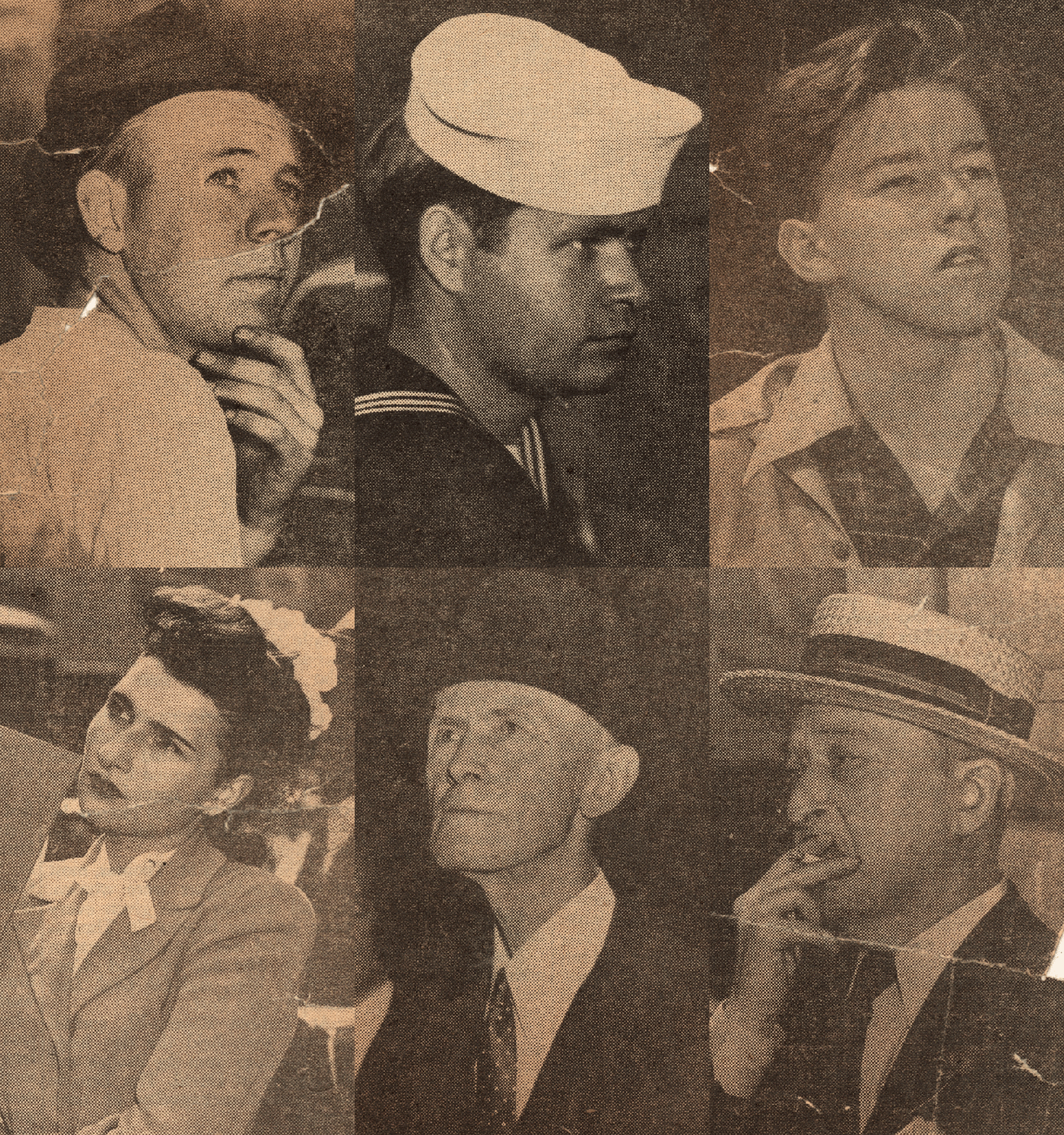
The Face of New York on Invasion Day

The crowds in Times Square were serious yesterday – glad that D-Day had come and yet solemn at the thought of the boys in the fighting. Below you see some of the faces turned up toward the electric sign on the Times building as bulletins of Allied progress were flashed out. Photos by Weegee.


PM, June 7, 1944, p.20


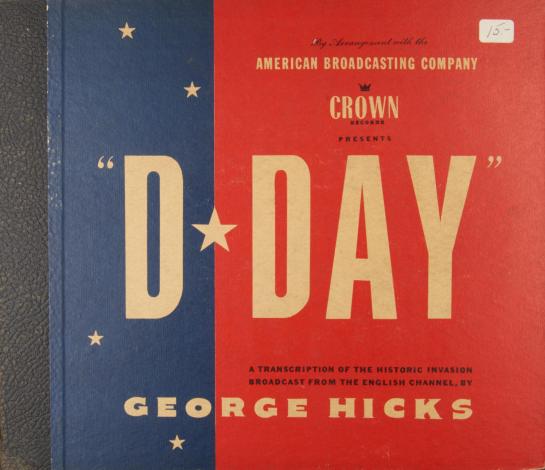
“D-Day Polka,” Brunon Kryger “King of the Polkas” and his International Orchestra, 1945


Weegee, Naked City, 1945


PM, May 31, 1942, pp.8-9 (photo by Weegee)

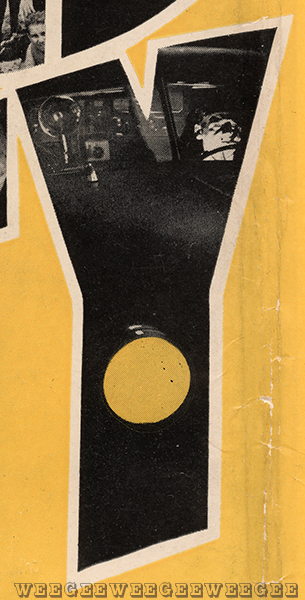
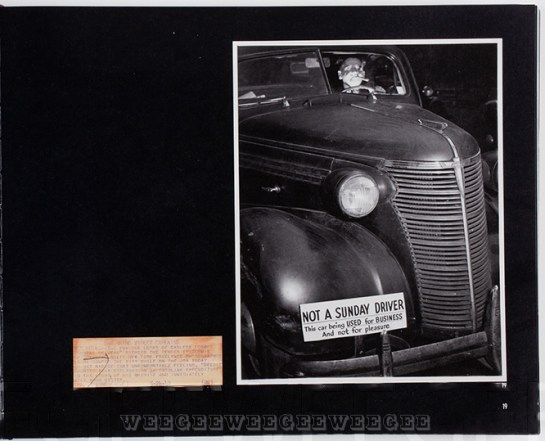
Weegee, free-lance news photographer who drives around New York in search of pictures, got so many dirty looks during the first two weeks of gas rationing that he had a sign painter letter this card for the rack that used to hold his front license plate. Like one out of every 10 motorists in the East, Weegee has an X card.
PM, May 31, 1942, p.8


Extra! Weegee!, p. 19

Shrinking Violet Explains

New York – The envious looks of gasless former “Sunday Drivers” pierced the tender epidermis of “Weegee” noted New York freelance photographer as he toured the city while on the job today. To get rid of that uncomfortable feeling, “Weegee” mounted this explanation of gasoline expenditure on the front of his machine and immediately felt much better.
Credit Line (ACME) 5-24-42

Extra! Weegee!, p. 19


Screenshot, whitney.org


We’re the Sunday Drivers, Billy Murray’s Trio (Carl Mathieu, Monroe Silver and Murray), 1927