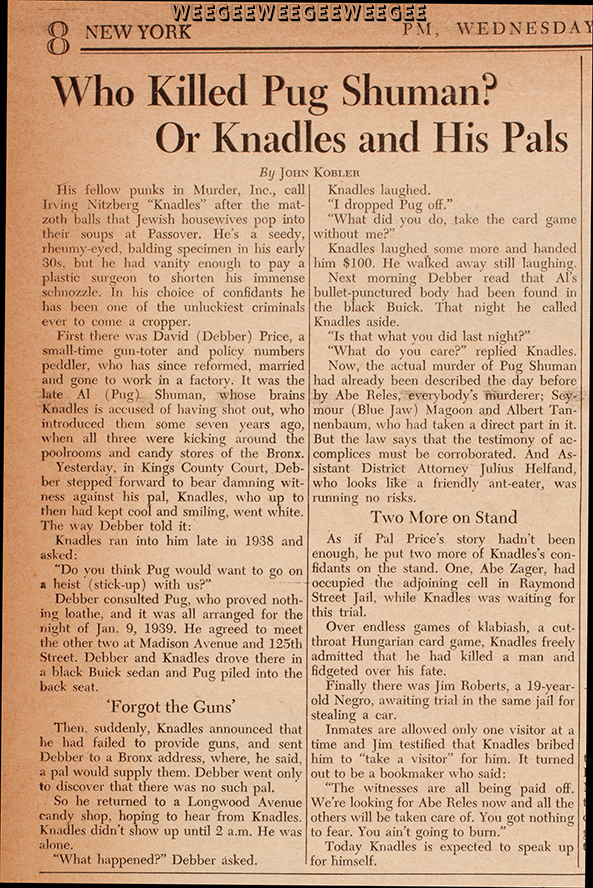
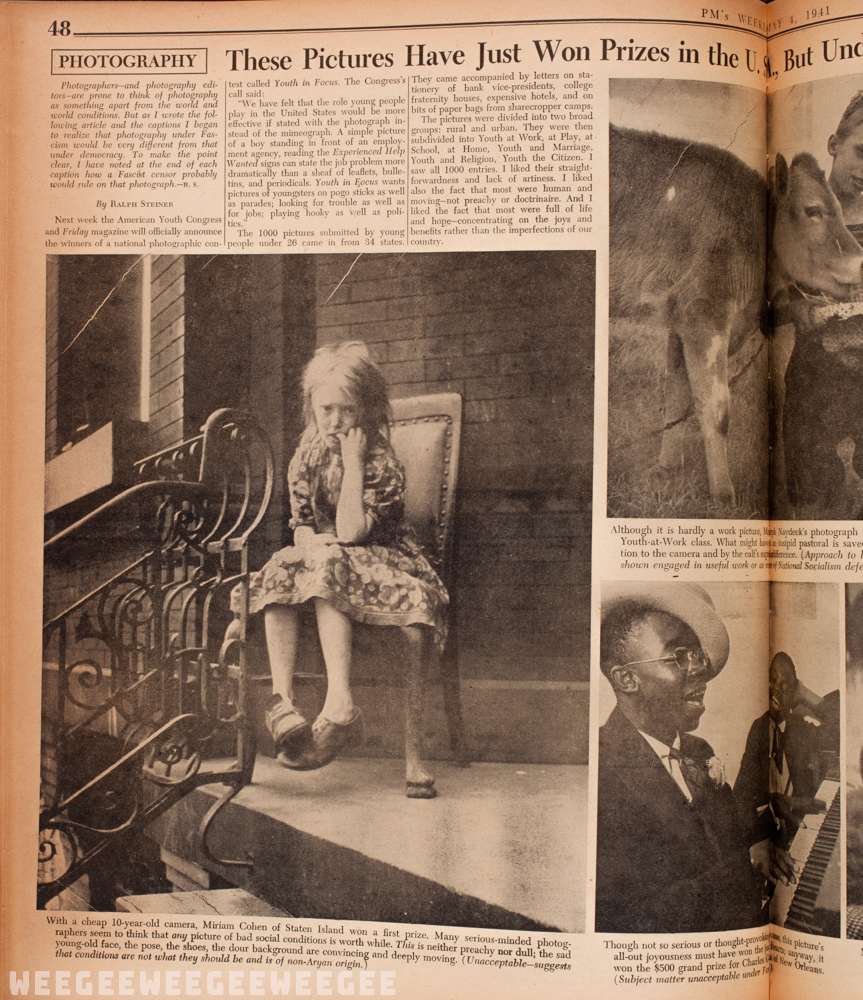
Newspaper PM, article about Murder Inc. member or associate
PM, May 23, 1941, p. 9

“Up From the Slums, or How Young Knadles Nitzberg Made His Nark” by John Kobler

PM newspaper, Weegee photo of kids on fire escape
PM, May 23, 1941, p. 23

Record of a New York Day

“The hot weather last night took Weegee, the photographer, to the Lower East Side, where he found these children sleeping on a tenement fire escape at Irving and Rivington Streets. Weegee says he gave the kids $2 for ice cream, but their father took charge of the dough.”

Weegee's book Naked City
Weegee, Naked City, pp. 22-23

Tenement Penthouse

But the other fire escape is somewhat overcrowded… its not so bad sleeping that way… except when it starts to rain… then it’s back to the stuffy tenement rooms.”

[$2 had the same buying power as $38.15 in April 2021.]


Tenement Symphony,” Larry Clinton’s Bluebird Orch.; Kuller; Golden; Borne; Peggy Mann and Butch Stone, 1941


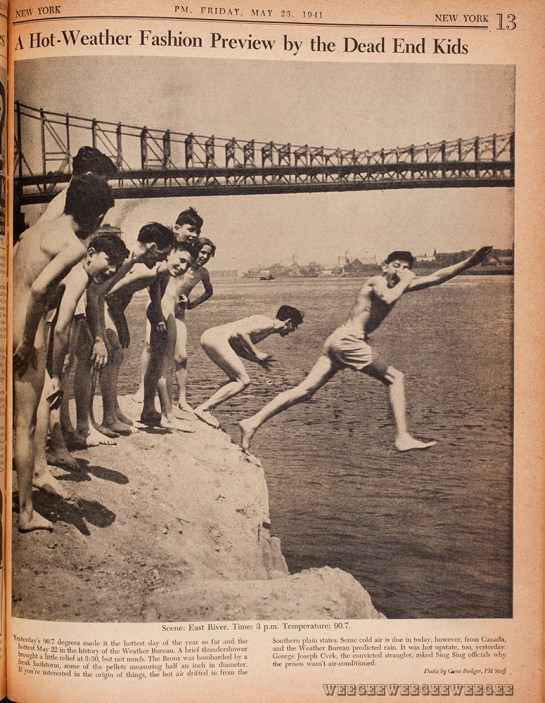
PM, May 23, 1941, p. 13 (photo by Gene Badger)

A Hot-Weather Fashion Preview by the Dead End Kids
Scene: East River. Time 3 p.m. Temperature: 90.7.

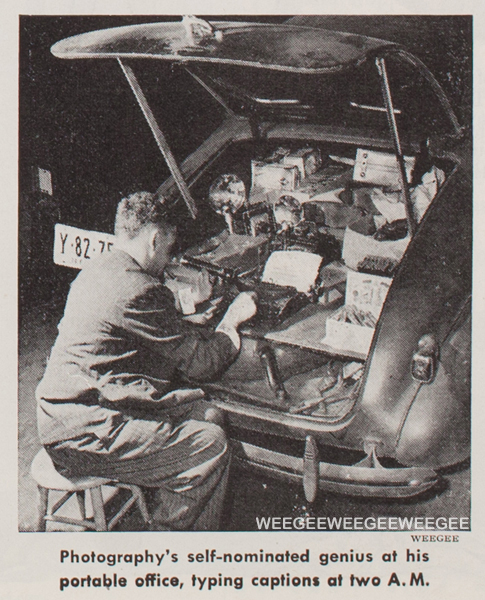
Weegee sitting behind his car typing

Weegee text, May 22, 1943
May 22, 1943

Midnight to Dawn, Anything Can Happen

When Weegee opens an ordinary telephone conversation with “This is the fabulous Weegee talking,” he is telling the literal truth. He can gloat, and does, that his pictures hang in the New York Public Library and the Museum of Modern Art… In seven years Weegee has not gone to bed before ten A.M….

“New York’s so crowded inna daytime you can’t breathe onna streets,” Weegee says in his rich New Yorkese…


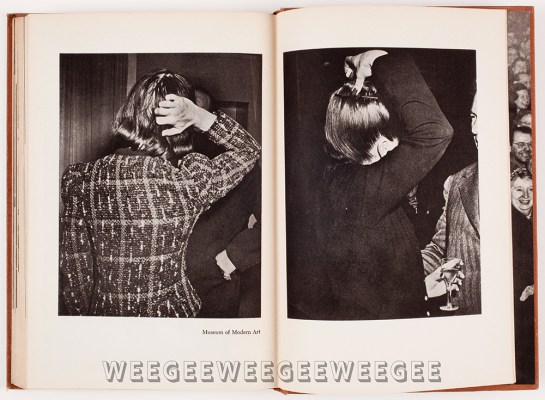
Screenshots, moma.org

(MoMA had these Weegee photos by 1943 or 4…)


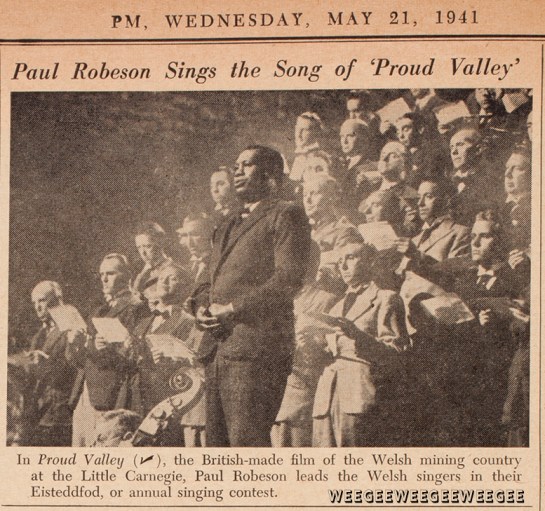
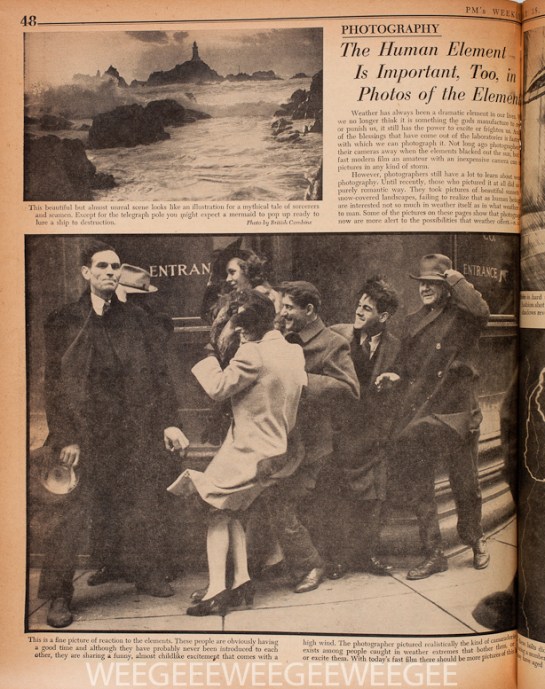
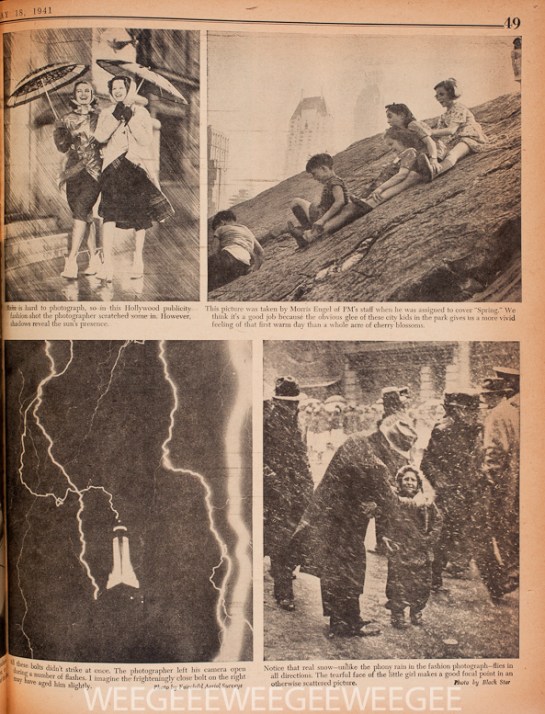
PM, May 18, 1941

Annual hobo convention in Jersey City, NJ… “What Are We Going To Do About It?”… Abe Reles believes in God… “Yes, but I had my manner of living. It was my business.” (Murder really was his business… too.)… “The Human Element is Important, Too…”… Rev. Utah Smith at MoMA’s “Coffee Concert”…


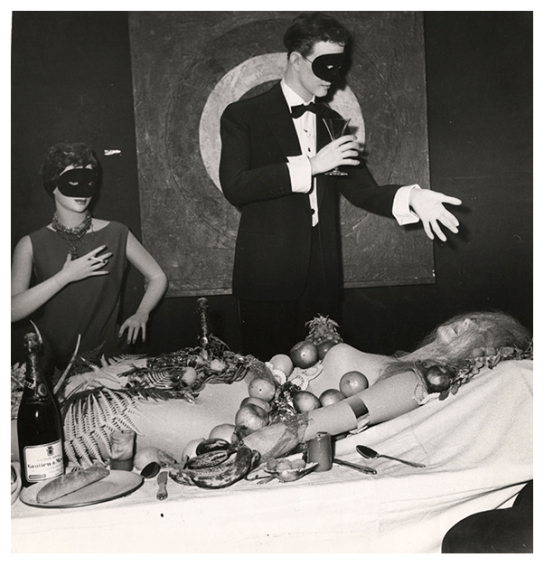
Weegee (1899-1968), [Exposition inteRnatiOnale du Surréalisme, or EROS, Paris], December 1959 – February 1960, (Screenshot)

To celebrate the 91st birthday of Jasper Johns (born May 15, 1930)… a pair of screenshots… “à la galerie Daniel Cordier…” Weegee à Paris…

Perhaps this exhibition introduced and/or exposed Weegee to art and artists that influenced his photographic practice… It’s not impossible that Weegee’s presence at this exhibition was influential in his “distorted”-in-a-darkroom (human sculpture, etc.) photographs… (see: food for thought)…
Fellig the Zellig hobnobbing with the heady gourmands and leggy crustaceans; exquisite corpses… Weegee à Paris…


William Klein (born April 19, 1928), Vogue, (Screenshot)


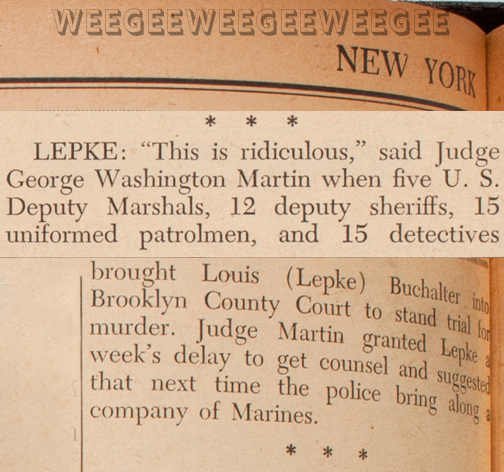
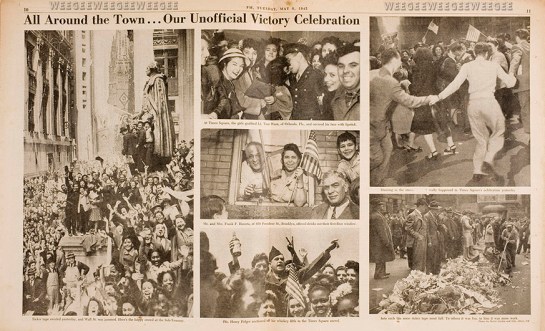
PM, May 11, 1941, p.10

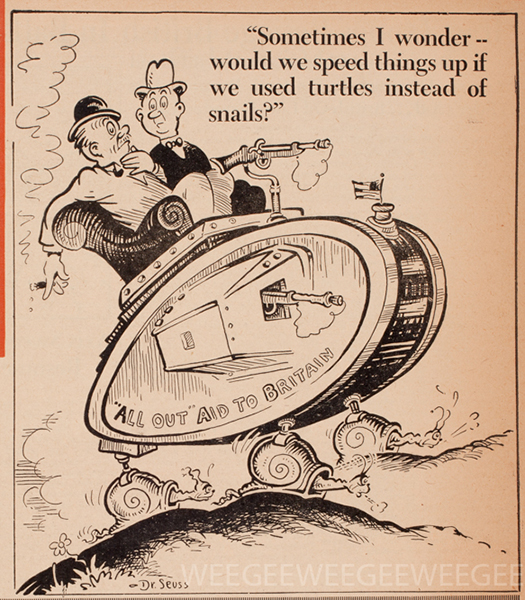
“This is ridiculous!”


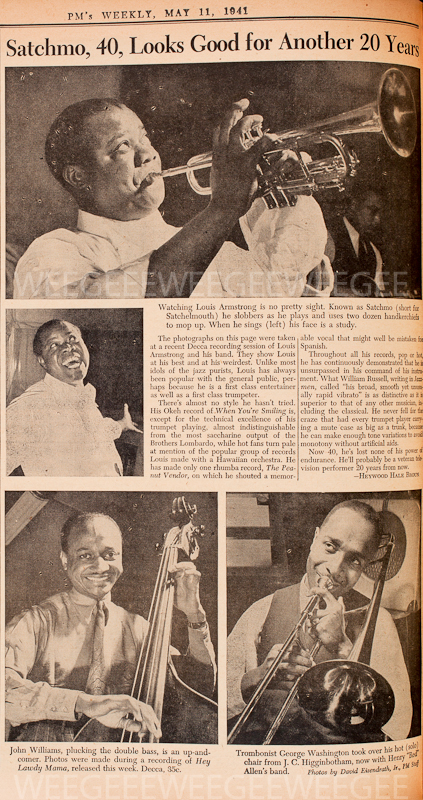
PM, May 11, 1941, p.58 (Photos by David Eisendrath, Jr., 1914-1988)

Satchmo, 40, Looks Good for Another 20 Years

The photographs on this page were taken at a recent Decca recording session…

Photos were made during a recording of Hey Lawdy Mama, released this week. Decca, 35 cents.”


Hey Lawdy Mama, Louis Armstrong and his Orchestra, 1941.

Armstrong looked and sounded great for another 30 years…

Lepke (1897-1944) and Armstrong (1901-1971)… two years older and two years younger than Weegee…


Once, we were all packed and ready to leave, but it proved to be a false alarm. The money my father had sent over turned out to be stage money. We didn’t know that he had sent it as a joke… the money looked real enough to us. On one side each bill said, “20.” On the other side was the joker… on the back of what looked like gorgeous twenties, the Madison Avenue boys of 1910 had printed advertisements for everything from sewing machines to phonographs. To my mother in Austria, Father had sent a dozen of these beauties… two hundred and forty dollars. Overjoyed, she took them to the bank in our town of Zlothev. The bank, without a question, exchanged these “throwaways” for good Austrian money. Mother bought steamship tickets for the whole flock of us and still had money left over. We were ready to leave for Hamburg, where we were to go aboard, when the bank officials came after us. They had made a mistake. The money Father had sent was phony! So we had to unpack and wait until he could send real money.

Father kept on working. By this time, he had decided that he could do better as his own boss with a pushcart. When the second shipment of money came to Zlothev, it was O.K., and the five of us, Mother, my three brothers and Weegee, could leave by first-class steerage.
Weegee by Weegee, pp. 8-9

Even in those days, I was one of the night people. We lived next door to the public school but I just couldn’t get up in the morning. When I heard the school bell ringing, I jumped out of bed, dressed quickly and dashed to class . . . no breakfast. Lunchtime, I returned home. My mother had a light, warm lunch for me and, also, a penny for a piece of candy.
Weegee by Weegee, p. 10

After the sweat-shops I stationed myself at the elevated station at the Third Avenue “L” at Bowery and Grand. Often I was chased by the special cops of the elevated because the candy stands up on the platforms considered me unfair competition. But I always came back. I stayed on until I had sold out my stock, at about eight o’clock at night, and then proudly went home to hand over my money, in pennies and nickels, to my mother.
Weegee by Weegee, p. 12

Every day to work I wore a white shirt, reasonably clean, with a hard Arrow collar and tie, and knickers. My mother gave me a couple of sandwiches and fifteen cents, ten cents for carfare and a nickel for a pint of milk. Many mornings, when there was no money, I had to take my alarm clock to the pawnshop. I hocked it for half a dollar. On pay day, I always redeemed that clock. Big Ben spent more time in the hock shop than with me.
Weegee by Weegee, p. 15

(Weegee’s mother, Rivka Felig , in Chapter 1, Tintype, from Weegee by Weegee, 1961…)