Once, we were all packed and ready to leave, but it proved to be a false alarm. The money my father had sent over turned out to be stage money. We didn’t know that he had sent it as a joke… the money looked real enough to us. On one side each bill said, “20.” On the other side was the joker… on the back of what looked like gorgeous twenties, the Madison Avenue boys of 1910 had printed advertisements for everything from sewing machines to phonographs. To my mother in Austria, Father had sent a dozen of these beauties… two hundred and forty dollars. Overjoyed, she took them to the bank in our town of Zlothev. The bank, without a question, exchanged these “throwaways” for good Austrian money. Mother bought steamship tickets for the whole flock of us and still had money left over. We were ready to leave for Hamburg, where we were to go aboard, when the bank officials came after us. They had made a mistake. The money Father had sent was phony! So we had to unpack and wait until he could send real money.

Father kept on working. By this time, he had decided that he could do better as his own boss with a pushcart. When the second shipment of money came to Zlothev, it was O.K., and the five of us, Mother, my three brothers and Weegee, could leave by first-class steerage.
Weegee by Weegee, pp. 8-9

Even in those days, I was one of the night people. We lived next door to the public school but I just couldn’t get up in the morning. When I heard the school bell ringing, I jumped out of bed, dressed quickly and dashed to class . . . no breakfast. Lunchtime, I returned home. My mother had a light, warm lunch for me and, also, a penny for a piece of candy.
Weegee by Weegee, p. 10

After the sweat-shops I stationed myself at the elevated station at the Third Avenue “L” at Bowery and Grand. Often I was chased by the special cops of the elevated because the candy stands up on the platforms considered me unfair competition. But I always came back. I stayed on until I had sold out my stock, at about eight o’clock at night, and then proudly went home to hand over my money, in pennies and nickels, to my mother.
Weegee by Weegee, p. 12

Every day to work I wore a white shirt, reasonably clean, with a hard Arrow collar and tie, and knickers. My mother gave me a couple of sandwiches and fifteen cents, ten cents for carfare and a nickel for a pint of milk. Many mornings, when there was no money, I had to take my alarm clock to the pawnshop. I hocked it for half a dollar. On pay day, I always redeemed that clock. Big Ben spent more time in the hock shop than with me.
Weegee by Weegee, p. 15

(Weegee’s mother, Rivka Felig , in Chapter 1, Tintype, from Weegee by Weegee, 1961…)


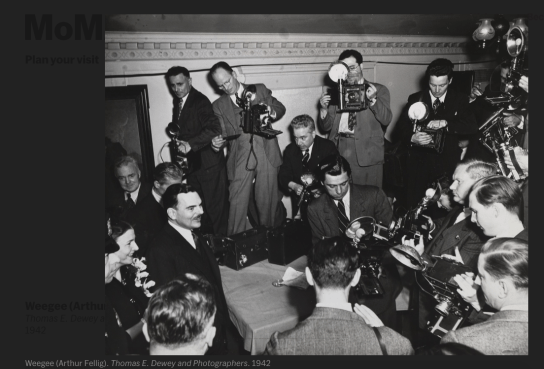
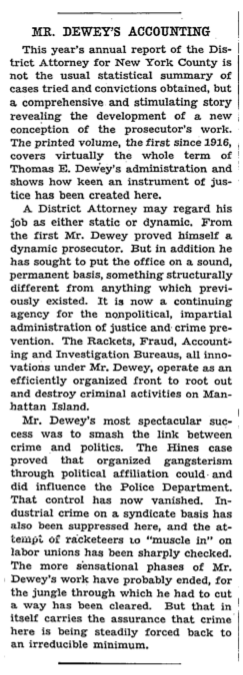
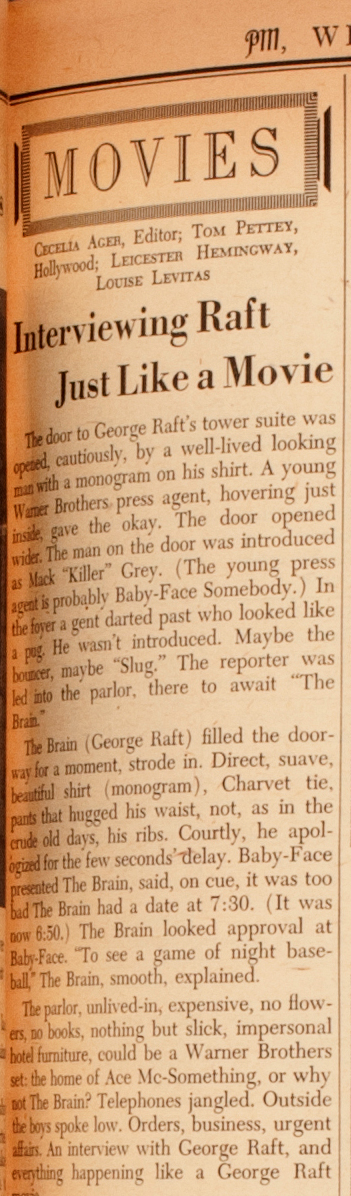
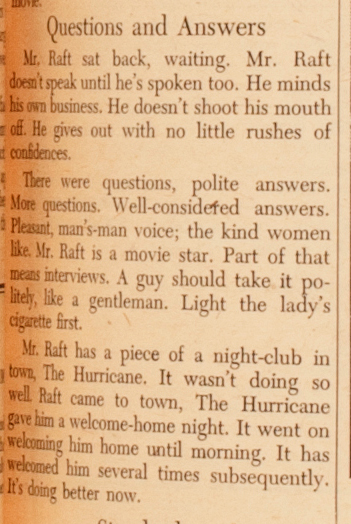
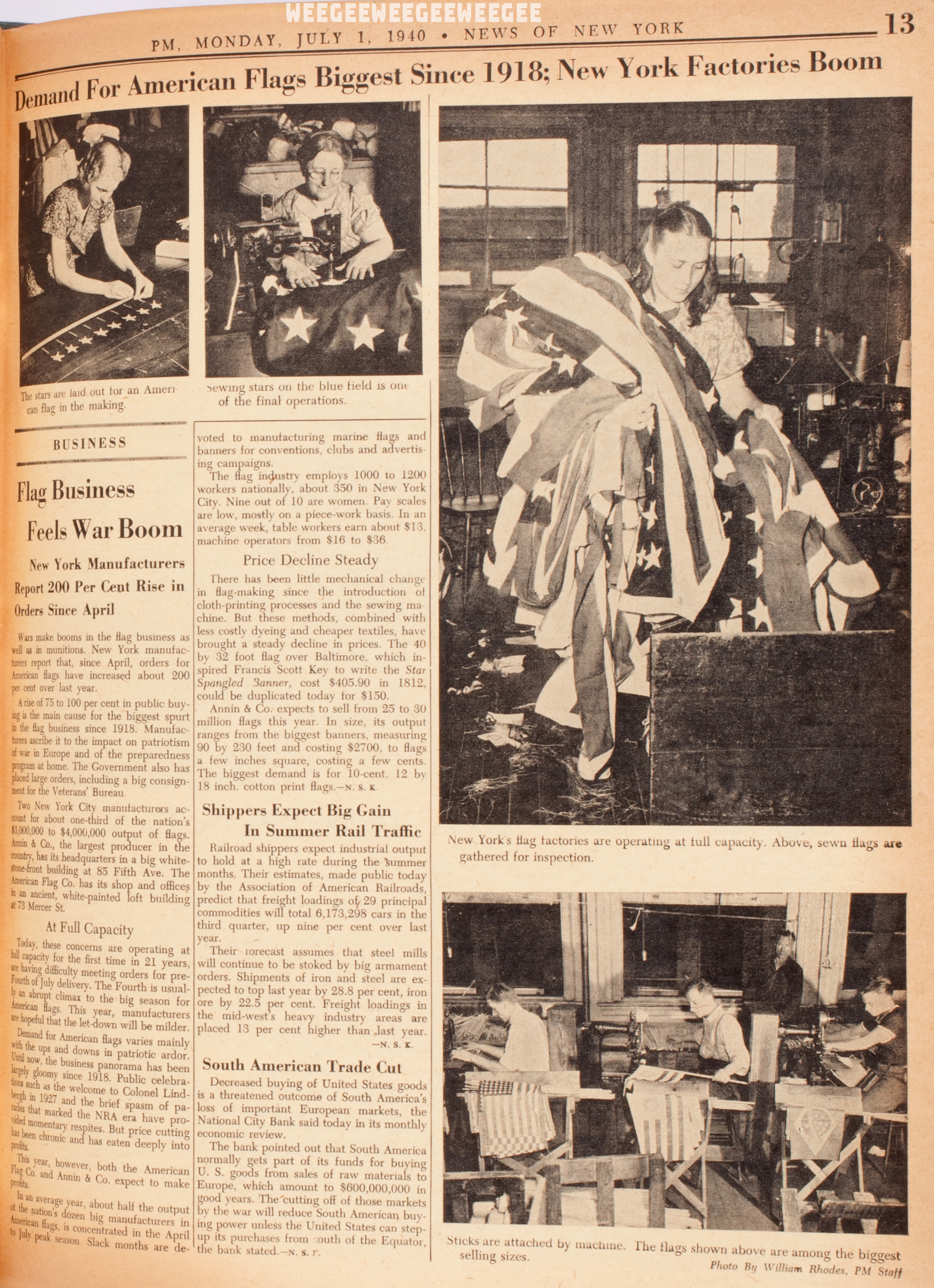
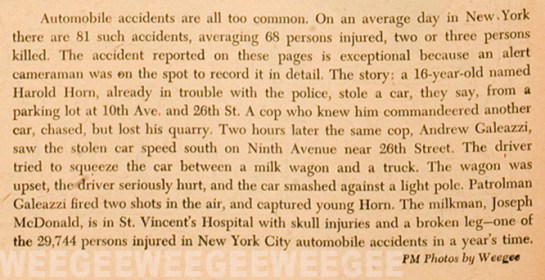
PM, May 2, 1941 (photos by Peter Killian)

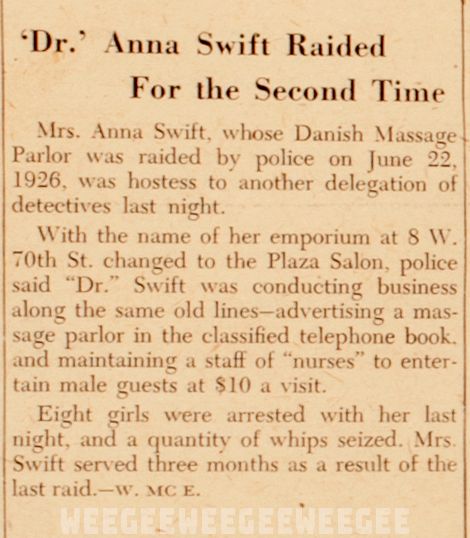
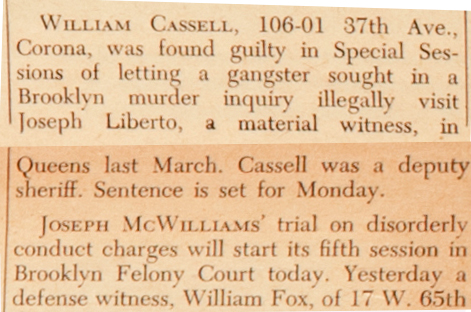
(Anthony Esposito and William Esposito found guilty of murder… Ann Corio (and Ed Sullivan), and a diminished May Day Parade…)


PM, May 1, 1941, p.7

Here’s What Makes a Museum Modern by Henry Simon.”

(“Coffee Concerts” started at 9 PM. Museum admission was $1.50. In May 1941 $1.50 had the same buying power as $27.59 in March 2021; in May 2021, museum admission is $25. The Sophistichords, Herman Chittison, solo, and John Kirby and his Orchestra, from Cafe Society Uptown… One of the songs performed by Herman Chittison at MoMA on April 30, 1941 was The Man I Love. One of the songs performed by John Kirby and his Orchestra was Double Talk.)
Museum of Modern Art to Present Series of Non-Concert Music Including Swing, Folk Songs, Gospel Singers, Spanish Dancers, and Voodoo Drummers… PDF of press release.


The Man I Love, Herman Chittison, 1941 (piano solo).


Double Talk, John Kirby and his Orchestra, 1941.


PM, May 1, 1941, p.7

‘Citizen Kane’ Gets A Running Start
Citizen Kane, the Orson Welles movie which for four months has withstood a nationwide Heartskrieg, opens tonight, 8:30, at the Palace. Its advance business, nourished by the newspaper controversy, is booming…
…”I can always show it,” he said. “I’ll show it in a ballpark with four screens, in auditoriums, at fairs, in circus tents, in necessary…”


Flamingo, Herman Chittison, 1941 (piano solo).


I Should Care, Herman Chittison Trio, 1945.


Extra! Weegee!, pp. 300-301

“Weegee” Lends a Helping Hand
New York — Down at the Bronx Terminal Market, 151st and Exterior Sts., to cover the picketing by retail dealers, photographer “Weegee” got into the swing of things and carried a placard for the picketers. Here, he holds up the sign denouncing black marketeers, all the while puffing on his big cigar and keeping his camera handy for a good picture. The market was picketed by dealers protesting the black market and tie-in sales.
5/29/45


PM, August 20, 1940

They’d Sooner Be at the Beach But, Heat or No Heat, Jobs Are Scarce
Weegee, the wag, finished up the day by taking his own picture in the darkroom. Note camera release in his hand.


Hugo Montenegro, Ellington Fantasy, Vik, LX-1106, 1958
“Recorded at Webster Hall, New York City, July 23, 25 and 31, 1957.”
Photo by Weegee.

hugo-montegegro4

Conductors and Composers of Popular Orchestral Music: A Biographical and Discographical Sourcebook, by Musiker and Musiker, 1998

hugo-montegegro1
Billboard, May 26, 1958

Recreation of Hugo Montenegro’s Ellington Fantasy album with recordings of 78s by Duke Ellington and his Famous Orchestra:


Black and Tan Fantasy, 1927


Sophisticated Lady, 1940


Do Nothin’ Till You Hear From Me, 1940


Solitude, 1934


Azure, 1937


Mood Indigo, 1930


Caravan, 1937


In a Sentimental Mood, 1935


I Got It Bad and That Ain’t Good, 1941


Don’t Get Around Much Anymore, 1947


I Didn’t Know About You, 1944


I Let a Song Go Out of My Heart, 1938

Happy Birthday anniversary to DUKE ELLINGTON…